

NVIDIA has just announced partnerships with Apollo, BlackRock, Blackstone, Brookfield, Goldman Sachs and KKR to establish independent financing platforms that will mobilize $500 billion of third-party capital for AI infrastructure.
In the announcement, NVIDIA describes a shift from companies buying chips and building data centers project by project to “AI factories” financed as repeatable, productive infrastructure. It is the largest pool of third-party capital ever organized for the AI buildout.
The detail that matters most for the equipment finance industry sits in the announcement’s Q&A. NVIDIA may provide a residual value support mechanism for up to 25% of an opportunity, assessed deal by deal. The manufacturer is now publicly prepared to stand behind a 25% residual.
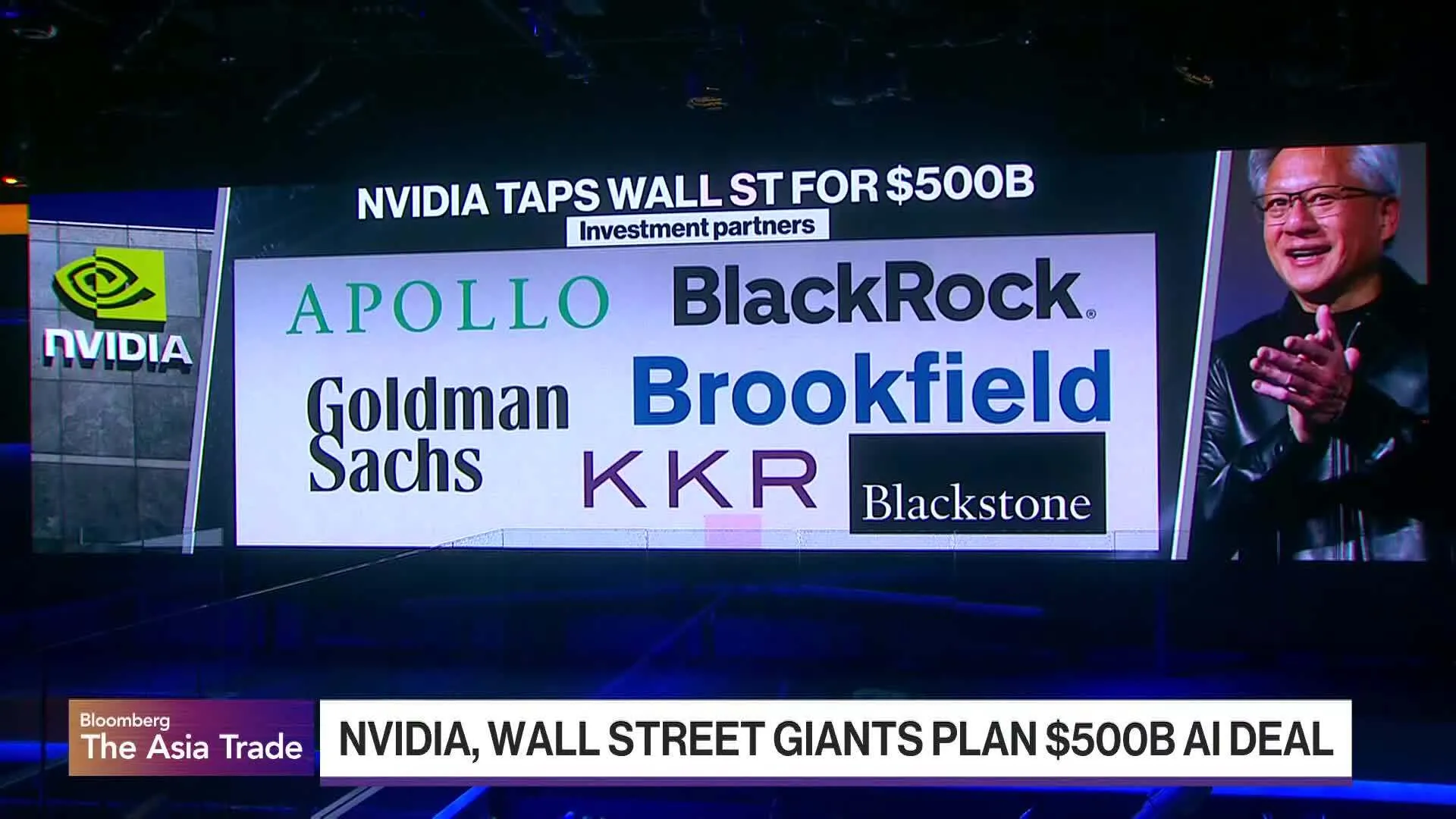
ex1. From Bloomberg’s coverage of the announcement
The announcement does two things to the equipment finance industry.
The first is competitive pressure. GPU financing now has a purpose-built channel, affiliated with NVIDIA, that is not an equipment finance company. The world’s largest private credit and infrastructure investors are being organized to finance GPUs at scale. Lessors that spent the past two years deciding whether GPU servers belong on their books are now watching $500 billion of institutional capacity move in. This can lead to adverse selection: the best transactions go to that designated channel, while the weaker deals it passes over land with equipment finance companies. Alternatively, private credit capital may still need equipment finance companies to originate, service, and manage transactions; rather than displacing.
The second is a residual benchmark. When the manufacturer itself publicly supports residuals up to 25%, that figure becomes the reference point. Equipment finance professionals may now have to treat 25% residual positions as the market norm for GPU financing — and expect clients to arrive at the table already knowing it. While the announcement does not specify the schedule, a reasonable assumption is that the 25% is for three years.
Within a day of the announcement, equipment finance executives were already asking the obvious question: Will NVIDIA sell off these residual obligations to reinsurers?
While details about the residual value program are still limited, the most likely answer is no. NVIDIA can carry residual risk comfortably, for reasons that do not extend to anyone else in the market.
Start with the back-of-napkin math. Imagine NVIDIA sells $100 million of equipment in a single transaction. Its gross margin is roughly 75%, so it makes $75 million on the sale. If it later has to pay out the full 25% residual — $25 million — it is still up $50 million. In the very scenario where NVIDIA’s residual value support pays out in full, the equipment sale keeps NVIDIA profitable.
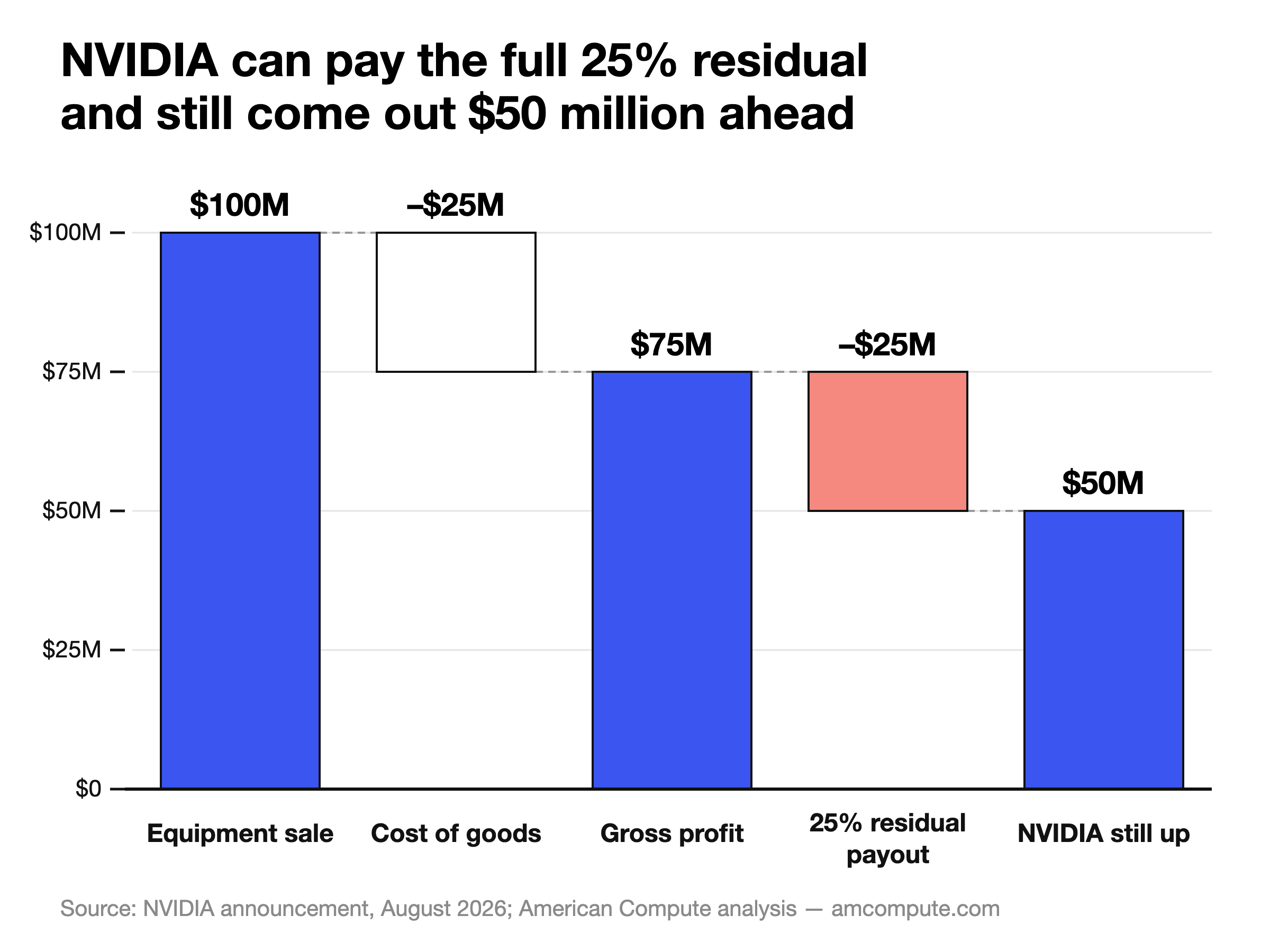
ex2. Napkin math for NVIDIA residual value
The position gets stronger from there. NVIDIA can refurbish returned equipment and certify its condition itself, and a secondhand buyer will pay a premium for a unit carrying the original manufacturer’s stamp of approval. For the transactions NVIDIA supports, that alone makes a residual loss unlikely in the first place. And the residual value “support” wording implies the exposure lands as a footnote disclosure in NVIDIA’s filings rather than a $25 million liability on the balance sheet — so there is no investor-optics pressure to reinsure it away.
But if you run the same 25% residual through a lessor’s books, it looks very different. An equipment finance company has no 75-point gross margin on the equipment sale to absorb a residual miss. An asset manager cannot certify a refurbishment the way the manufacturer can, does not control the software that extends useful life, and has no advance view of the product roadmap.
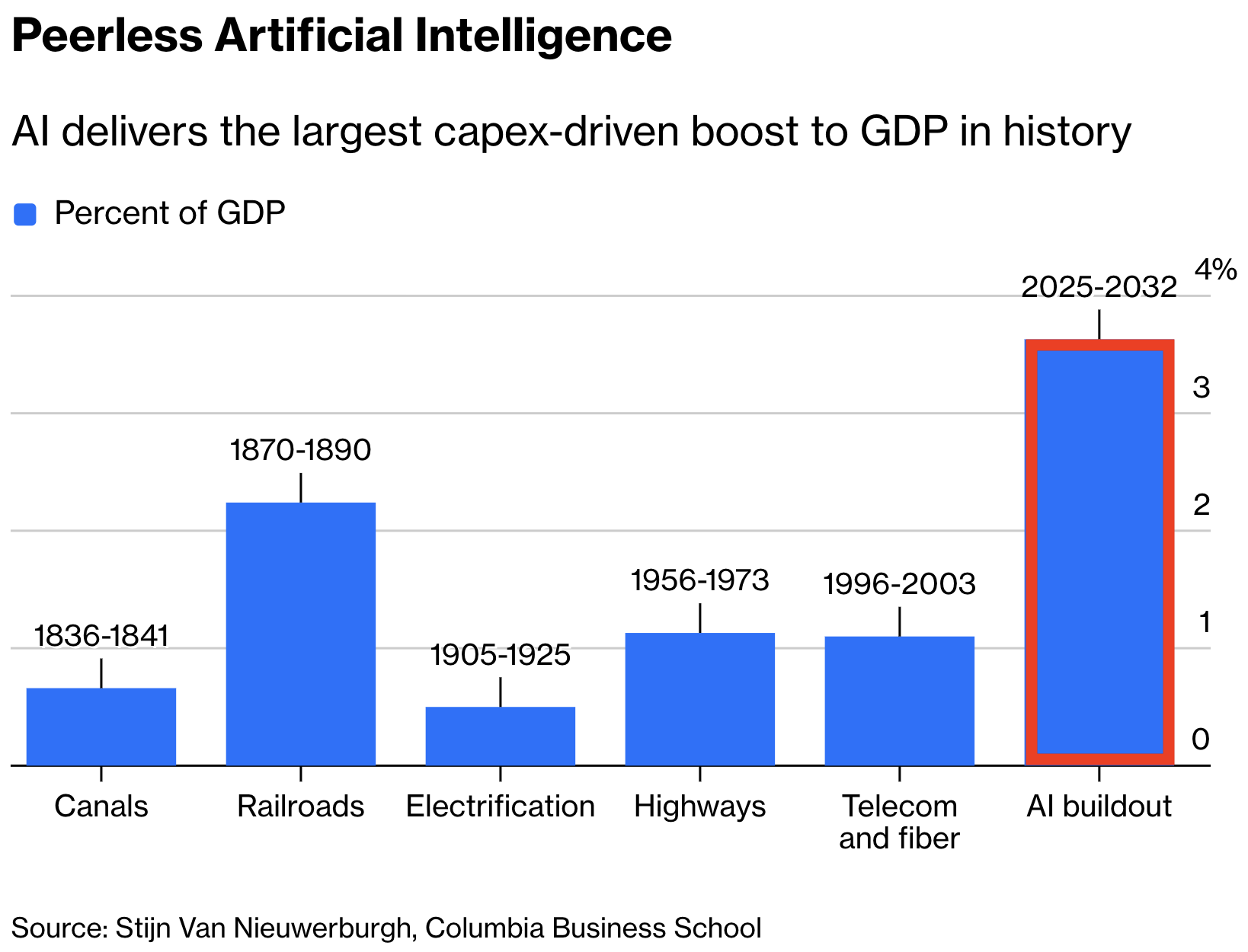
ex3. Source: Bloomberg Opinion; Richard Abbey, John Authers, Stijn Van Nieuwerburgh
The AI buildout is on track to deliver the largest capex-driven boost to GDP in history — bigger than the railroads, the highways, or the telecom and fiber wave.
The consequences for equipment finance are taking shape. The pressure to participate just increased: private credit is not waiting, and one of the largest equipment classes in US history will be financed with or without equipment finance companies. Client expectations will now move: a 25% residual is public, manufacturer-endorsed, and easy to ask for. And the benchmark deserves careful handling: 25% is a sound residual for NVIDIA, not necessarily for lessors.
Author
Bernie Margulies is CEO of American Compute, which works with established reinsurance partners to structure bona fide residual value insurance solutions for data center IT equipment. These solutions enable equipment finance companies to book residuals with confidence — without relying on buybacks, promises, or alternative guarantees.