

Ask a room full of equipment finance professionals how they entered the industry, and you will hear a remarkably common response: “I fell into it.” For years, we have treated that story as a charming feature of our profession. Perhaps we should view it as diagnostic.
Few people intentionally pursue careers in equipment finance because few people know the industry exists. The more conversations I had, the more I began to suspect that some of our workforce challenges may start earlier than we think.
Industry leaders are rightly focused on talent shortages, succession planning, demographic shifts, skills gaps and attracting the next generation of professionals. The Equipment Leasing & Finance Foundation, ELFA, NEFA, CLFP, finance companies, service providers and countless volunteers have invested significant time and resources addressing these challenges. Those conversations are important, and the work being done across the industry is valuable.
Yet after spending the past year speaking with students, scholarship applicants, educators, recent graduates and industry leaders while developing career-focused resources for aspiring professionals, I have come to believe that equipment finance has a front-door problem.
The Industry Few Students Discover
Several months ago, I was speaking with a college student exploring careers in finance. She knew about investment banking, commercial banking, accounting, consulting and venture capital. When I asked whether she had ever heard of equipment finance, she paused and asked a simple question: “What exactly is that?”
Her response was not unusual. In conversations with students, particularly those attending HBCUs and other institutions where our industry has historically had limited visibility, I have found that many students are unfamiliar with equipment finance as a career option. Yet once they learn about the industry, many express genuine interest in the opportunities available.
After dozens of conversations, I have yet to meet a student who learned about equipment finance and concluded it wasn’t worth exploring. What I encounter far more often are students who have never been given an opportunity to consider it in the first place. In fact, many seem surprised by how broad the industry is.
Unlike investment banking, accounting, insurance or consulting, equipment finance rarely appears in university curricula. Most business students can complete four years of education without ever encountering a course, speaker, internship program or career-center resource that introduces them to the industry. As a result, many talented students never have an opportunity to consider equipment finance among their career options.
The Hidden Cost of “Falling Into It”
At first glance, the industry’s tendency to “fall into” equipment finance may seem harmless. In reality, it carries consequences. When discovery depends primarily on chance, opportunity often depends on chance as well.
For many professionals, entry into the industry begins with a personal connection — a recruiter, a mentor, a family member, a professor or simply a chance conversation. Most of us can point to one of those moments in our own careers.
I did not begin this journey expecting to arrive at this conclusion. Like many others, I initially assumed the industry’s challenge was helping students compete for jobs. The more conversations I had, however, the more I realized that many students never make it far enough to compete. They never discover the industry at all.
The challenge is that opportunity distributed through chance is rarely distributed evenly. Students with family connections to financial services, established professional networks or access to industry mentors often have more opportunities to discover specialized career paths. Others may possess equal talent, curiosity and potential but never encounter equipment finance at all.
The industry’s future workforce should not depend primarily on who happens to stumble across it.
The Visibility Gap
This creates what I call the Visibility Gap. One way to think about workforce development is as a progression:
Visibility → Awareness → Interest → Exploration → Preparation → Application → Employment
Most workforce-development efforts understandably focus on the latter stages of this pathway.
- How do we recruit more effectively?
- How do we create stronger internship programs?
- How do we improve onboarding and professional development?
- How do we retain and develop talent?
These are important questions. When workforce-development discussions occur, they naturally gravitate toward recruiting, internships, onboarding and retention. Far less attention is given to how students first learn that the industry exists.
What if the greatest opportunity lies further upstream?
If students never become aware of the industry, the rest of the talent-development process never begins. I don’t believe the industry’s challenge is a lack of effort. I believe it is a lack of reach. Many organizations are doing meaningful work. The question is whether enough students are ever exposed to those efforts.
What Industry Leaders Are Telling Us
One of the more interesting insights emerged from conversations with industry leaders while gathering perspectives for a student-focused career initiative. When I asked several industry leaders what they look for in students and early-career professionals, I expected many of the answers to focus on technical skills.
What surprised me was not the consistency of the answers. It was how little emphasis most leaders placed on technical expertise. Most believed those skills could be taught. Curiosity, communication, professionalism, initiative, business understanding and problem-solving ability were mentioned far more often. That observation struck me because it reinforced how accessible many careers in equipment finance can be. Employers are often looking for potential, not perfection.
Their expectations were reasonable — but they also highlighted a challenge. How can students prepare for opportunities they have never been shown? Before students can prepare for equipment finance careers, they must first discover that those careers exist.
Another industry executive offered a related observation. Many students who do learn about equipment finance often view it too narrowly. They may think only of finance companies while overlooking the broader ecosystem of technology providers, operations specialists, analysts, accountants, treasury professionals, software companies, consultants and service providers that support the industry.
For many students, the industry is not only unfamiliar. It is also misunderstood. The opportunity set is far broader than most people realize.
Why Existing Efforts Matter — And Why More Is Needed
To be clear, the industry is not standing still. The Equipment Leasing & Finance Foundation has done an excellent job expanding academic outreach and advancing workforce-development initiatives. ELFA member companies participate in campus engagement efforts. The CLFP Foundation continues to promote industry education and professional development. Numerous organizations, including NEFA and AACFB, support scholarships, internships, mentoring and emerging-leader programs. Many of these programs are doing exactly what they were designed to do.
The challenge is that the potential audience is dramatically larger than the number of students currently being reached. Even successful programs often reach dozens or hundreds of students at a time, while the potential audience includes thousands of students pursuing degrees in business, finance, accounting, economics, information systems, analytics, supply chain management and related fields. The challenge is not effort. The challenge is scale.
What We Learned from Building a Front Door
One of the assumptions we made while developing BEFN’s Career Starter Series was that students would primarily want help with resumes, interviews, networking and job searches.
We were wrong. Again and again, students brought us back to more fundamental questions:
- What is equipment finance?
- What kinds of careers exist?
- How do people get into the industry?
- Why should I consider it?
The questions students asked told us far more than any survey could have. That realization changed the direction of the project. Before helping students navigate a career path, we first had to help them see the path. The experience reinforced something I now believe strongly. Awareness — not opportunity — may be the industry’s primary bottleneck.
The 10% Shift
If that observation is correct, what should we do with it? The answer is not to abandon existing workforce-development efforts. Internships, recruiting programs, mentorship initiatives and professional development remain essential.
Rather than asking organizations to do something entirely new, I would propose a modest shift in emphasis. What if every organization involved in workforce development shifted just 10% more of its effort upstream toward visibility and awareness?
For individual professionals, that might mean speaking to a college class once each year, participating in a career panel or helping explain what equipment finance actually does.
For small independents, brokers and service providers, it could mean offering a one-day job-shadowing experience or partnering with a local college career office. A single day of exposure may not create an immediate hire, but it can create awareness that influences future career decisions.
For larger organizations, it might involve dedicated awareness campaigns, stronger university partnerships or more intentional engagement with career centers and faculty members who influence student career exploration.
For associations and industry groups, it could mean continuing to expand free shared educational resources and student-facing content that help demystify the profession and amplify the industry’s collective voice.
Individually, none of these ideas will transform the industry’s talent pipeline. Collectively, they might.
An Industry Opportunity
The encouraging part of this discussion is that the industry does not need to invent new opportunities. Those opportunities already exist. Equipment finance offers meaningful careers, entrepreneurial pathways, strong earning potential, intellectual challenge and exposure to virtually every sector of the economy.
Our challenge is not creating opportunity. It is making more people aware of it. For decades, equipment finance has done an excellent job helping people succeed after they enter the industry. The next opportunity may lie earlier in the journey.
Somewhere today there is a future underwriter, sales leader, cyber-security specialist, operations executive, entrepreneur or CEO who would thrive in equipment finance if given the opportunity to learn about it. That individual may be sitting in a classroom, exploring career options, or trying to decide where to begin a professional journey.
Many talented people will never encounter equipment finance through a textbook, a professor or a campus recruiting event. Whether they discover the industry may depend on the actions we take as professionals, employers, associations and advocates.
Perhaps the most important workforce-development question facing the industry may be:
“How do more talented people find us?” •
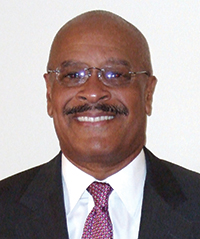
George A. Parker, CLFP, is co-CEO of VenSource Capital and president of the Black Equipment Finance Network (BEFN). With more than four decades of experience in equipment finance and commercial lending, he has held leadership roles across the industry, including serving as a director and treasurer of the National Equipment Finance Association (NEFA), and currently serves on the Monitor’s Editorial Board. Throughout his career, Parker has been dedicated to advancing the industry through talent development, mentorship and education. He is actively involved in workforce development initiatives that promote industry awareness.