
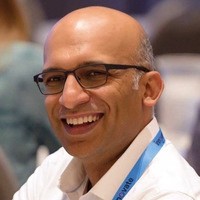
Mathew Abraham knows Odessa from the inside. He served as the company’s COO until 2022, and he has now returned as CEO at a moment when, he says, the asset and auto finance industries are entering a new era shaped by automation and AI. Before Odessa, Abraham held roles in the semiconductor industry at Intel, Applied Materials, ASML and Veeco.
Monitor asked Abraham why he came back, what has changed at Odessa while he was away, and where he sees the biggest growth opportunities after the company delivered more than 20 implementations across North America, Europe and APAC in the past 18 months. He also explained what AI-powered experiences should look like for lenders, how he will apply lessons from his semiconductor career, and what employees and customers should notice about his leadership in his first 90 days.
What made this the right moment to return to Odessa, and what did the conversations with Madhu Natarajan and the board look like before you accepted the role?
Mathew Abraham: Odessa is at an exciting point in its journey. The company has built strong momentum having invested in its platform, grown significantly in our global customer and employee footprint, and has clear opportunities ahead in both Asset and Auto finance. My conversations with Madhu Natarajan and the board focused on building on that foundation, accelerating growth, and continuing to deliver long-term value for customers. We shared the same view of where Odessa is headed and the opportunity in front of us. That alignment gave me a lot of confidence, and ultimately made the decision a very natural one.
You left Odessa in 2022 and now come back as CEO rather than COO. How does that change in seat affect how you plan to lead the company day to day?
Abraham: As COO, I was closely focused on implementation, customer success, and day-to-day operational aspects of the company. As CEO, the perspective is broader. I am responsible for bringing together our customers, our people, our technology and services into a coherent long-term direction.
This means building and supporting a cohesive global leadership team, and keeping the organization focused on executing towards a clear vision. Also, I want to remain close to our customers, because it is through those relationships and valuable conversations that the kernel of our roadmap and vision emerges — this is the Odessa way.
What’s changed most about Odessa — its products, its clients, its culture — in the time you’ve been away?
Abraham: The global scale and sophistication of the business have grown significantly. The platform continues to evolve, with greater investment in automation, AI-powered experiences, and modernization. Odessa has also in the time I was away truly established its presence across Europe and APAC (whereas previously it was primarily North America based) and is building momentum in auto finance.
What has not changed is the depth of industry knowledge within the company and the commitment people have to our customers. That combination of continuity and progress is one of Odessa’s greatest strengths.
Odessa has delivered more than 20 implementations across North America, Europe and APAC in the past 18 months. Which of those regions or client segments do you see as the biggest growth opportunity now?
Abraham: Delivering more than 20 implementations across North America, Europe and APAC in the last 18 months tells us something important: the demand for modern asset and Auto finance technology is not isolated to one market. It’s a global shift, and we’re seeing it across established lenders, captives and independent finance providers alike. Having said that, our North America business remains our most dominant in absolute scale, but in both Europe and APAC the rate of growth has been terrific. We have strong leaders in these regions who have grown world-class teams that have earned the trust of the industry by delivering our technology successfully to some of the most premier players in these geographies.
Across those markets, we’re hearing a consistent challenge from lenders: they want to modernize their operations while maintaining the control, flexibility and governance their businesses require. That’s exactly where Odessa is strongest. We continue to see momentum in key regions, growing interest in Auto finance, and increasing demand for platforms that can help lenders adapt and scale with confidence no matter where in the globe their enterprise needs to scale.
Our focus is simple: prioritize the areas where we can create the most value for customers and where our platform and industry experience can make the biggest difference.
The release mentions investment in automation, AI-powered digital experiences and platform modernization. Can you get specific — what does an AI-powered digital experience look like for an asset or auto finance lender using Odessa’s platform?
Abraham: For lenders, AI should deliver measurable business outcomes, not just new technology. It should help automate routine work, surface better insights and enable faster decisions so teams can focus on the areas where human judgment adds the most value.
It should help them respond to customers faster, make better credit and operational decisions, improve productivity, and scale their business without a proportional increase in cost.
For example, a lender should be able to get answers faster, automate routine servicing tasks, and equip teams with the information they need without having to move across multiple systems.
That’s how we think about AI at Odessa. We’re focused on embedding intelligence across the asset lifecycle so that information, insights and actions are available in the flow of work. Whether it’s origination, servicing or portfolio management, the objective is the same: help lenders operate more efficiently, provide better customer experiences and adapt more quickly to changing market conditions, while remaining firmly in control of their data and processes.
You talked about Odessa expanding into new markets, geographies and product areas. Which of those is the top priority for your first year as CEO?
Abraham: The immediate priority is accelerating on an already sound fundamental strategy of: widening our global footprint across asset finance, building momentum in auto finance, and deepening our investments in our platform by enabling more automation, AI, and technology modernization.
Ultimately, it’s about rapidly and continuously bringing value to our customers and enabling them to scale more efficiently as their businesses grow and diversify.
This strategy, combined with staying close to our customers and hearing directly from them about the impact we have on their business, creates a self-reinforcing feedback loop that keeps us focused in a way that enables our customers and Odessa to thrive.
What operational lessons from your semiconductor-industry roles at Intel, Applied Materials, ASML and Veeco do you expect to bring to running a software company for asset and auto finance?
Abraham: At heart, I’m a bit of a nerd. I love technology, science, and people, and I’ve always been curious about how things work. That curiosity has stayed with me throughout my career.
The industries are different, but the fundamentals of leading a global technology business are remarkably consistent. Great technology only creates value when talented people are aligned around a clear objective, and the organization can execute consistently.
My experience has reinforced the importance of disciplined execution, curiosity, and investing in people. I want teams to understand where we are going, and how their work contributes to our customers’ success. Ultimately, customers don’t buy technology for its own sake. They buy outcomes. That’s true, whether you’re building semiconductor equipment or enterprise software.
In the press release, you said the asset and auto finance industries are entering a new era shaped by automation and AI. What’s the biggest risk for lenders that move too slowly on that shift — and what’s the biggest risk for those that move too fast?
Abraham: For lenders that move too slowly, the biggest risk is not simply falling behind competitors. It is falling behind their customers. Expectations for faster decisions, simpler interactions and more responsive service are rising with the advent of AI.
Moving too fast creates a different risk. AI introduced without strong data, controls and clearly defined business guardrails can add risk rather than remove it. In a regulated industry, trust and transparency cannot be afterthoughts.
At Odessa, we believe the right approach is purposeful progress: start with the business problems that matter, build on a modern platform, and keep people firmly in control. The winners won’t necessarily be the ones who adopt AI first. They’ll be the ones who use it most effectively to create better experiences, better decisions, and better business outcomes in a consistent and predictable way. This is especially true in our industry where precision and control cannot be compromised.
Where do you see the equipment and auto finance software market in five years, and how does Odessa need to evolve to stay ahead of that?
Abraham: In five years, asset and auto finance will be far more connected, intelligent, and adaptable. Lenders will be able to respond faster to economic change, evolving risk, new financing models and rising expectations from customers and dealers. AI and automation will increasingly become part of everyday operations rather than separate tools.
Odessa’s role is to help lenders modernize at their own pace, scale with confidence and adopt new technologies without losing control of their business. We need to continue making the platform easier to adapt, embed intelligence where it creates clear value, and support innovation across the full lifecycle, from origination through servicing and remarketing.
Technology matters, but it isn’t enough on its own. Our advantage comes from combining an end-to-end platform with nearly three decades of experience in this industry. Staying close to our customers and anticipating where their businesses are going will remain central to how Odessa evolves.
You previously led Odessa’s global delivery organization across implementation and customer success. How will that experience shape your priorities as CEO, especially around client retention and satisfaction?
Abraham: It gives me a very practical view of what creates a strong customer relationship. Signing a contract isn’t the start of a transaction. It’s the start of a relationship. The real measure of success is the value a customer continues to receive through the process of delivering our technology and continuously thereafter over literally decades as their business evolves. Choosing Odessa is often a generational choice for our customers, and one that is fundamental to the success of their business and often careers.
Having led Odessa’s global delivery organization, I understand the importance of predictable execution, clear communication, and staying engaged when customers are navigating change. As CEO, I want that customer perspective to inform decisions across the company, from our product investments to how we deliver and support the platform.
One of my priorities is ensuring that there remains a clear thread across all the stages of the customer journey from Sales to Delivery to Customer Success. The feedback through that journey deeply informs our product investments, and initiatives. My responsibility is to ensure the integrity of that thread so we remain a trusted, long-term partner to every customer.
What’s one thing you want Odessa’s employees and clients to notice about your leadership style in the first 90 days?
Abraham: I hope people notice that I ask a lot of questions. Not because I don’t have opinions, but because I’ve learned that the best ideas are often already in the room with people closest to the challenge or opportunity at hand. My style is fairly Socratic, in that I would rather enter a dialogue and jointly get to a decision rather than rush in a certain direction. This helps secure the best ideas, and as one digs deeper with those that know the most, inherently a stronger sense of ownership of the outcomes.
My style is collaborative, but it is also focused on action. I like to get beyond the surface of a problem, involve the people closest to it and then help create the clarity they need to move forward.
For employees, that means understanding how their work contributes to customers’ success. For customers, it means knowing that Odessa’s leadership is listening and that their priorities are helping shape our decisions. Ultimately, I want both groups to experience the same thing: openness, clarity, and follow-through.
Across his answers, Abraham keeps returning to the same idea: Technology matters, but it creates value only when it is aimed at outcomes customers care about and guided by people who stay in control.