

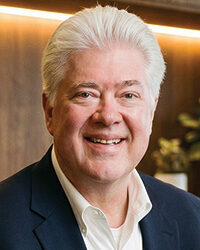
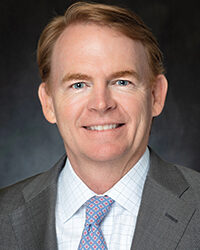
Tom Depping had, by his own account, been “happily retired for a while.” Then he decided to try again. That decision is now Fox Ridge Capital, a new equipment and technology finance company for small and mid-sized businesses that officially launched in April, backed by LKCM Headwater Investments — the same Fort Worth-based private equity firm that has partnered with Depping through three earlier ventures. It’s a reunion two decades in the making, and for Depping, it’s a return to a business plan he says has barely changed in three or four decades: build a product powered by good technology and surround it with a team that’s genuinely passionate about the customer.
“It’s been very successful for us over a long period of time,” Depping said in an interview. What’s changed, he argues, is the opportunity in front of him — a mix of market gaps, technological leaps and capital-market shifts that made this the right moment to build something new rather than simply enjoy retirement.
Why Build Rather Than Buy
For an operator with Depping’s track record, buying an existing platform would seem the easier path. He rejected it. A big reason, he said, is that acquiring an established company means inheriting stale legacy technology along with a culture that’s already set — one that may not fit what he wants to build. Starting fresh let him recruit selectively, pulling in people he believes share his customer-first mentality rather than absorbing an entire existing organization wholesale.
That’s not to say Fox Ridge is a clean break from Depping’s past companies. The executive team includes industry veterans who Depping has worked with for decades. But he’s also brought in new recruits, including Dawn Gillette, who joined from Grasshopper Bank, and Brian Todd, who came from First Citizens Bank — both of whom, Depping said, fit the culture he’s trying to build.
Three forces converged to make now the moment, in Depping’s telling. First, consolidation has thinned the ranks of independent lenders over the past five years, as many were absorbed by larger institutions — and independents, he argues, tend to bring more creativity to the table than what replaced them. Second, artificial intelligence has matured to the point where it can meaningfully improve both the customer experience and internal efficiency, something Depping said he wanted to be building around rather than reacting to. Third, private credit has exploded as an asset class over the same stretch, displacing traditional bank lending and opening up new avenues of credit for companies that might not have qualified for a bank loan.
“When you combine all those things,” he said, “I think the ability to… bring creative solutions” was too strong an opportunity to pass up.
A Two-Decade Partnership, Renewed
Backing Depping again is Brad Wallace, founding partner of LKCM Headwater Investments, whose relationship with Depping dates to 2004 — shortly after Depping sold First Sierra Financial and was raising capital to acquire a bank charter that became Main Street Bank. Headwater was there for that chapter and for the buildout of Ascentium Capital that followed, meaning the firm has watched Depping operate through both strong markets and the stress of the 2008–09 downturn.
“We have a lot of confidence in his ability to not only build the right sort of systems and build the right sort of platform, but also build a culture that makes businesses successful,” Wallace said. When Depping called last summer to gauge interest in backing a new venture, Wallace admitted his first reaction was surprise — he’d assumed Depping was content to spend his days fishing in retirement. Depping’s response, Wallace recalled, was that while he enjoyed fishing, he loved building businesses too.
Headwater did press Depping on the buy-versus-build question before committing. The firm said it had fielded roughly half a dozen opportunities to re-enter the equipment finance space since exiting Ascentium through the Warburg Pincus sale but had passed each time because of the legacy issues — culture, portfolio quality, aging systems — that come with acquiring an existing platform. Building fresh, Wallace said, means Depping can construct both the culture and the technology stack around today’s tools rather than retrofitting an inherited one.
Technology mattered to the investment case, Wallace said, but he was careful to frame it as a factor rather than the deciding one. “The investment decision was really more around culture and the people and the proven abilities that Tom has to build a business like this,” he said, noting that Headwater has helped stand up back-office and HR technology for other portfolio companies recently and has seen firsthand how much more capable off-the-shelf systems have become in just the past year.
The Hybrid Model
Fox Ridge describes itself as a hybrid of banking and fintech — a positioning Depping said reflects a deliberate attempt to avoid the weaknesses of both models. Banks, in his view, tend to be slow in decision-making; fintechs tend to automate relationships away entirely, leaving customers stuck with a chatbot instead of a person. Fox Ridge is trying to land in the middle: fast, agile decision-making paired with a sales force that maintains real relationships with vendors and borrowers.
That relationship layer is central to how Depping frames the company’s value proposition. Rather than positioning Fox Ridge purely as a capital provider, he described the company as “achievement-focused” — a phrase that also appeared in the company’s launch materials. In practice, that means integrating with vendor partners’ marketing and sales technology, building online application tools and working to ensure that whatever a customer finances actually helps their business grow, whether that customer comes through a vendor relationship or directly.
On the credit side, Fox Ridge isn’t targeting narrow verticals so much as businesses with predictable cash flow, wherever they’re found — though when the company does enter a specialized vertical, Depping said, it makes sure to build real expertise in it first. As a non-bank lender, he argued, Fox Ridge can offer a wider credit window than traditional banks, supported by risk-management tools and underwriting technology the team considers a competitive advantage.
Artificial intelligence factors into that underwriting and customer-service layer, but Depping was direct about where he draws the line. “Our people use the technology, but we like to feel like the technology doesn’t use us,” he said. He pointed to AI’s ability to synthesize customer communications — emails, calls — into a usable view inside a CRM, surfacing complaints or patterns that might otherwise stay buried. The goal, as he described it, is a better-understood customer, not a more automated one.
Culture as the Real Differentiator
Pressed on what will determine Fox Ridge’s success, both Depping and Wallace circled back to the same word: culture. Depping said the company’s incentive structures are built around team performance rather than individual performance, on the theory that a shared sense of ownership produces better outcomes for customers than star-driven organizations do. He cited that philosophy — along with a shared history among much of the founding team — as the biggest single advantage carried over from First Sierra and Ascentium.
Wallace framed Headwater’s own approach to the partnership in similar terms, describing the firm’s orientation as long-term rather than reactive to short-term market conditions. “Everything we do at Fox Ridge is not based for today, it’s based for five years from now,” Depping said.
Asked what “exceptional” looks like in five years, Wallace pointed to brand recognition as the clearest marker of success: durable funding channels, a diversified portfolio with strong loss performance relative to peers and status as a preferred provider for vendors and borrowers alike. Depping, who has now built two of the largest independent equipment finance companies in the industry across separate decades, framed the ambition more simply.
“We’re passionate about the product and our customer,” he said. “And it’s almost as simple as that.” •
Rita E. Garwood is editor in chief
of Monitor.