
Most business students graduate without ever hearing the words “equipment finance.” A new course at La Salle University in Philadelphia is built to change that. Beginning in the spring 2027 semester, La Salle’s School of Business will offer a class in commercial equipment finance, developed with the CLFP Foundation and the Equipment Leasing & Finance Foundation (ELFF). Students who complete the course earn the CLFP Student Certificate and become eligible to sit for the Associate CLFP designation, an industry credential they can carry into internship and job applications before they graduate.
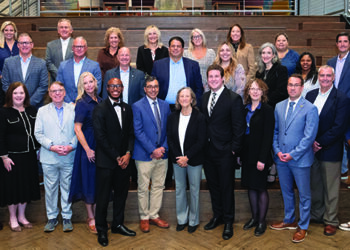
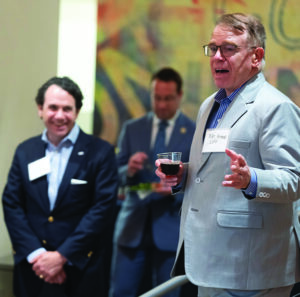
The partners marked the launch Sept. 22 with a reception at LEAF Commercial Capital’s Philadelphia headquarters. The room mixed independent finance companies, bank-owned lessors and private equity-backed firms with human resources professionals, La Salle faculty and La Salle alumni. Miles Herman, president and CEO of LEAF and chair of the ELFF Board of Trustees, said the guest list reflected a shared interest. “We are friendly competitors who want to see more talent come into this industry,” he said that evening.
Why La Salle, and Why Now
The talent problem is not new. “When I entered this industry more than 20 years ago, we were grappling with how to bring new talent into equipment finance,” Reid Raykovich, CAE, CLFP, CEO of the CLFP Foundation, said. Herman said the industry needs people in client-facing and behind-the-scenes roles alike, from legal to technology to financial reporting. Those jobs are “paramount” to how companies run, he said, and attracting the right people is “super critical.”
What changed was a working model. The University of North Texas (UNT) built a course on the CLFP curriculum, and it showed that a university class could give students a real on-ramp to the industry. “Equipment finance is a large, well-paying field that most business students never hear about until after they graduate,” Raykovich said. The foundations wanted to bring that model to a school where they could build a course from the ground up with like-minded partners.
La Salle fit the profile. Raykovich cited its strong School of Business, a deep alumni network in Philadelphia and a regional market full of equipment finance companies looking for entry-level talent. Michael Moll, interim dean of La Salle’s School of Business, said the program will “position La Salle students for potential, successful careers in this $1.3 trillion industry.”

The Person Who Made It Real
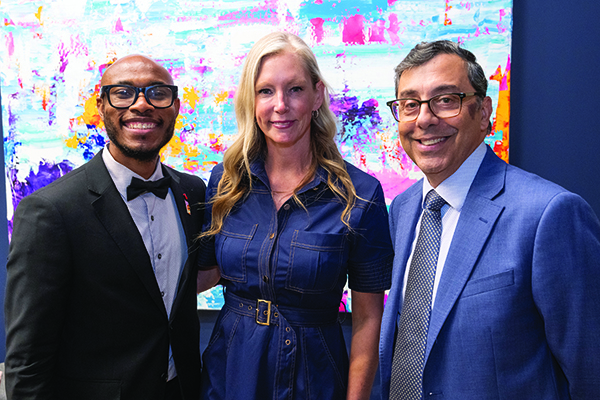
Raykovich credits one person above all for turning the idea into a class: Davon Dickson, director of the Center for Career and Professional Development at La Salle. The two began talking about a course together, and they built it side by side with the university.
“He saw how much love I have for this industry and how badly I wanted to bring a younger and more diverse generation into it,” Raykovich said at the reception. “Then he did something about it. That’s the difference between a good idea and a real course.”
Dickson saw the launch as a milestone for La Salle and its region. “This is a significant accomplishment for us here at La Salle and for the Philadelphia region as we become the first to launch this program,” Dickson said. “I want to thank Reid for always embracing my ideas and for your passion and commitment to helping students succeed. You’re one of a kind.”
He frames the course as part of a larger mission. “At La Salle University, we are committed to creating meaningful pathways that connect students to emerging industries and career opportunities,” Dickson said. “Through this initiative, students will gain industry knowledge, earn the CLFP Student Certificate and connect directly with professionals in the equipment finance industry.”
Built on a Proven Syllabus
The course adapts the UNT syllabus, known there as FINA 4700, and draws on The CLFP Handbook. According to the announcement, it covers foundational concepts, origination, and operations and servicing, giving students a grounding in the fundamentals of equipment finance within a single semester.
Chris Waltrich, who recently retired from First Commonwealth Equipment Finance, will teach it as an adjunct professor. Industry partners and alumni round out the support. Raykovich said she has been meeting with Philadelphia and South New Jersey firms about internships, mentoring, guest lectures and campus visits so students have employers waiting when the course begins.
Raykovich thanked Michael Gallo, who created the UNT class, for the blueprint. “He built the model, La Salle followed it and the rest of us just copied his homework,” she said. “Thanks to the model Michael Gallo created at UNT, we now have something we can recreate at other institutions, and La Salle is the next to do it.”
ELFF is also removing a barrier to entry. The foundation is donating textbooks and supporting scholarships, internships and networking events. “You’ve given them a head start,” Raykovich told ELFF leaders at the reception.
A Path With Three Steps
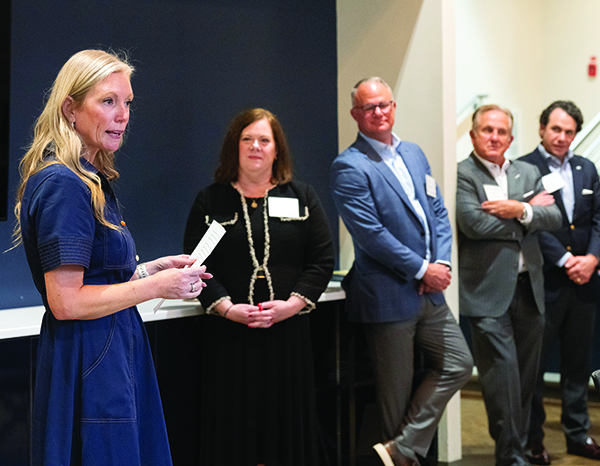
Raykovich described the student journey as a progression with three steps: 1) Students complete the course and earn the CLFP Student Certificate, 2) they sit for the exam and earn the Associate CLFP designation, which shows they have the knowledge base early in their careers and 3) once they have the required professional experience, they can pursue the full CLFP designation.
“Taken together, a student can graduate with a credential, an employer network and a clear route to the industry’s recognized designation,” Raykovich said.
The organizers are starting small on purpose. They hope to enroll at least 12 students in the inaugural class, reflecting La Salle’s smaller class sizes. “We’re deliberately starting with a focused cohort so we can fine-tune the experience, and we plan to grow from there,” Raykovich said.
What Success Looks Like
Kelli Nienaber, SVP of industry advancement at the Equipment Leasing and Finance Association (ELFA) and executive director of ELFF, said the course brings a long running collaboration to life. ELFF and the CLFP Foundation have worked together to strengthen the industry’s talent pipeline, and the La Salle class opens the door to a new pool of students who can apply for the ELFF scholarship program.
Just as important, Nienaber said, is the access to Philadelphia-area employers through internships and networking events. “Those personal connections are often what turn an interest into a career, and we’re grateful to the local employers who are opening their doors to these students,” she said.
Her definition of success for the first cohort is simple. Students earn their certificate through the CLFP Foundation, connect with industry mentors and internships at Philadelphia employers and, she hopes, some receive full-time employment offers. “If we can help students move from the classroom to their first job in equipment finance, we’ll know we’re building something that serves both the next generation of professionals and the companies who need them,” Nienaber said.
Volunteers will be central to that effort. “Our volunteers, who serve as mentors and guest lecturers, bring the industry to life for students by sharing how they found their own path in equipment finance,” Nienaber said. “That kind of personal connection is how real change happens, one student and one career at a time.”
Next Stops
La Salle is not meant to be the last stop. The course began at UNT, Nienaber said, and La Salle is the second. ELFF has researched priority geographic areas with strong concentrations of equipment finance companies, and it aims to continue building on the model at universities across the country.
The foundations already have a way in. ELFF is connected to universities nationwide through its Campus to Career program, and Nienaber said the group plans to build on those conversations. “Every new course creates another pathway for students to discover a rewarding career they may never have known existed, and another opportunity for local companies to meet the professionals who will help shape what comes next,” Nienaber said.
For Raykovich, the larger point is awareness: “Our goal is to make sure the next generation of equipment finance leaders knows this career exists and has a clear path into it.”
At the reception, Raykovich offered a more lighthearted measure of progress. This is now the second course dedicated entirely to commercial equipment finance, she told the room. “I can hear the industry exhaling,” she said. •
Rita E. Garwood is editor in chief of Monitor.