

LeadHER was built by women, for women, from the ground up. The program began not with a speaker list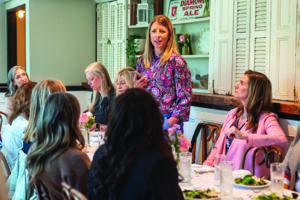 but with focus groups and surveys, gathering input from the women it was designed to serve. That process shaped a two-and-a-half-day experience anchored in peer connection, candid conversation and skill-building — deliberately built to move beyond passive keynotes and into active engagement.
The vision belonged to Lisa Rafter, publisher and CEO of Monitor and founder and CEO of STRIPES Leadership Program, who partnered with Lori Frasier, founder of ELFA’s first women’s council and founder and principal of BrightPath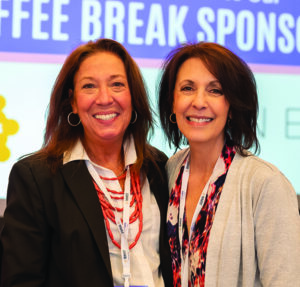 Workforce Strategies, to bring it to life. “It was built from the contributions of hundreds of women from equipment finance,” Rafter said. “Starting with the focus groups and surveys, to the many prep committees, the Catalyst Mentors, the breakout facilitators and the workshop leaders — committed and
passionate women who gave their time to say, ‘this is what we want!’ and then made it happen. The rest, as they say, is herstory. We started something powerful, and we’re just beginning.”
Two Days of Intentional Leadership
The Summit opened Tuesday evening with a welcome reception before the real work began Wednesday morning.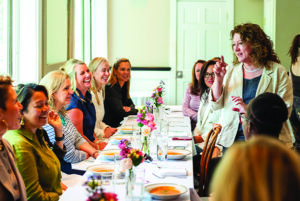 Frasier delivered the opening keynote, challenging attendees to pause, reclaim their agency and engage more intentionally with the pace of a fast-moving industry. Wendi Wasik of Wasik
Consulting followed with “Beyond Limits: Amplifying Your Influence and Impact,” examining the cognitive frames that can quietly constrain women’s leadership potential.
The afternoon turned hands-on with two workshop tracks: Dr. Shanna B. Tiayon led a session on strategic boundary-setting for senior leaders, while Dr. Terri Boyer — founding director of the Anne Welsh McNulty
Institute for Women’s Leadership at Villanova University — guided attendees through expanding their spheres of influence. Day one closed on a lighter note at SPIN Philadelphia, where Jessica Edelist of Dakota Financial
claimed the LeadHER ping pong tournament trophy.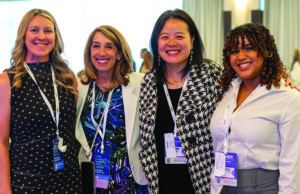
Day two opened with “Coffee & Candor,” a moderated panel that brought together some of the industry’s most senior voices: Leigh Lytle of the Equipment Leasing & Finance Association, current ELFA chair Deb Baker of HP, Reid Raykovich of the Certified Lease & Finance Professional Foundation, and Rafter
herself, moderated by Frasier. The Summit’s closing workshop, “The Authenticity Key: Masks Off. Confidence On,” led by Hilary Bilbrey of Compass & Key, sent participants home with tools, not just inspiration.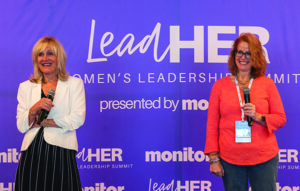
Why Companies Invested in Their Leaders
For the organizations that showed up, LeadHER wasn’t framed as time away from work — it was framed as work. PEAC Solutions sent nine leaders to the event, including Eileen Schoonmaker and Jennifer Fanz, who served as Catalyst Mentors. The company described it as an opportunity to “encourage growth, mentorship and connection across our industry.” Tina Paparone Ferguson of PEAC framed her attendance as a direct extension of the company’s investment in its people. LTi Technology Solutions was similarly explicit about the calculation behind its involvement: “Investing in events like LeadHER reflects our commitment to the advancement of women in our industry. We’re grateful to Monitor for building this community and proud to play a role in supporting it.”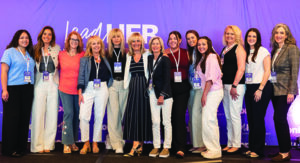
Attendees made the same case. Alex Patterson of Commercial Capital credited her company’s leaders for backing her attendance, describing their support as immediate. Renee Lincoln of 1st Source Bank thanked four members of her leadership team “for investing and supporting all women on our team.” Amy Lewis of KLC Financial was explicit about the return: she said she came back “to bring new ideas back to KLC Financial while continuing to invest in the incredible people I have the privilege to work alongside.”
For some companies, the investment was collective. Katie Stautberg of Great American Insurance attended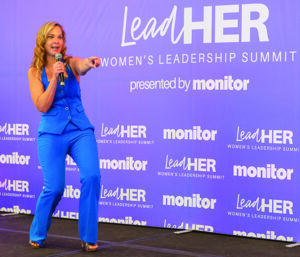 alongside multiple coworkers, calling the shared experience “a powerful reminder of why I love what I do and who I get to do it with” — the kind of team cohesion companies typically build standalone offsites around, produced here as a byproduct of sending a group to one event. And Casey Mills, attending her first industry conference on behalf of ElmBlue Capital, made a point of thanking her employer by name for “investing in me and giving me the opportunity to continue to grow.”
The seniority range in the room mattered too. Early career attendees like Mills sat in the same Mentor Circles as C-suite executives, and companies sent both. For an industry where leadership pipeline and retention of women professionals have been a persistent, named challenge, that cross-level mixing was part of the greater vision.
A Structure Built to Outlast the Event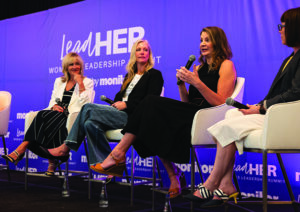
The Mentor Circle structure — pairing attendees with senior Catalyst Mentors across multiple sessions
over two days — was designed to produce something more durable than conference-week energy. Attendees were invited into a 30-day follow-up conversation to keep those connections active, giving companies a mechanism to point to when asking what their investment produced: not a single day of content, but the start of a mentoring relationship.
“I left Philadelphia energized by what we built together and optimistic about the future of leadership in equipment finance,” Frasier said. “As the world of work continues to evolve at an unprecedented pace, organizations need leaders who can navigate complexity with confidence, think systemically, make collaborative decisions, foster authentic human connection and create clarity amid uncertainty. Those capabilities begin with self-awareness and a willingness to lead with intention. That was the vision behind
LeadHER.”
With dozens of companies represented and even more covering the event afterward, LeadHER’s inaugural year set a marker other organizations will be measured against next time: did your company invest in your women leaders?