

In this exclusive roundtable, top independent executives discuss why specialized expertise and a “talent-first” culture are the ultimate weapons in an increasingly consolidated landscape.
In an era defined by “higher-for-longer” interest rates and rapid technological disruption, independent equipment finance companies find themselves at a critical crossroads. As traditional banks tighten their credit boxes and the industry undergoes significant consolidation, the ability to remain nimble is no longer just an advantage — it is a necessity for survival. In this exclusive roundtable, senior leaders from Dext Capital, Wingspire, Auxilior Capital Partners, North Mill Equipment Finance and Clarus Capital sit down to discuss how they are navigating economic headwinds, integrating AI without losing the human touch, and securing the next generation of talent to sustain the independent model.
In a persistent “higher-for-longer” interest rate environment, how has your strategy for diversifying funding sources evolved to maintain competitive pricing while protecting your margins?

SCOTT ESHLEMAN: Our finance team at Dext is top-notch and is continuously working with our bank partners to put in place warehouse facilities that support our business. We have accessed the ABS market six times in our history with improved execution on each one. In addition, we have added forward flow partnerships with insurance companies that provide us access to bank competitive cost of funds for our investment-grade customers.
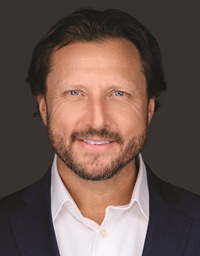
ERIC FREEMAN: In order to maintain margin in this environment, we have taken an “all of the above” approach. Specifically in the last year we have: 1) Executed on a new warehouse facility in early 2025 that has a 90bps lower spread than our previous warehouse; 2) Executed on our second ABS transaction and continue to focus on it as our permanent source of financing; 3) Began a programmatic hedging strategy in 2026 to lock in spreads in between ABS issuance and 4) Invested significantly in our direct sales team to ensure the majority of our volume comes from the higher margin direct channel versus lower margin indirect business.

STEVE GROSSO: Our strategy has remained focused on disciplined capital management and diversification. Auxilior has always focused on maintaining access to diversified, patient and strategic capital. Asset and
liability management, as well as interest rate management, have been an “active sport” for Auxilior over the past few years, ensuring that we continuously evaluate market conditions and adjust strategies as needed.
Auxilior actively explores interest rate management strategies such as formal hedging, innovative product offerings and risk management for off-balance-sheet activities to help protect margins while maintaining attractive financing solutions for our partners and customers.

DAVID LEE: At NMEF, we have deliberately built a multi-channel capital strategy that includes bank facilities, institutional investors, private credit relationships and securitization execution. This approach allows us to align specific asset types and durations with the most efficient funding source.
One of the fundamental challenges in equipment finance is that assets are typically fixed-rate with 36-to-72-month maturities. Reliance on floating-rate bank facilities can create significant margin compression in rising-rate
environments, as we experienced in 2022–23. Regular access to fixed-rate securitization markets mitigates much of this risk, though it does not eliminate it entirely. Conversely, the recent decline in benchmark rates has improved margins over the past year. In that sense, a “higher-for-longer” environment with a downward trajectory can be constructive.

STEVE O’LEARY: Clarus opened its doors in August of 2021, and rates were rising as we constructed our portfolio, making it challenging to maintain our margin. We were fortunate to be constructing a high-yielding portfolio prior to issuing our inaugural ABS in late 2024. The ABS issuance was well received in the market, locking in a fixed cost of capital, thus providing a healthy interest rate margin. With very flexible capital supporting us, we can build sizable portfolios prior to securitizing. Also, depending on the interest rate environment we find ourselves in, we may consider various hedging strategies.
As AI and automated credit decisioning become more widespread, how is your firm leveraging technology to increase efficiency without sacrificing the personalized, relationship-driven service that typically defines the independent sector?
ESHLEMAN: Dext has been technology-forward since day one and originally created our proprietary auto-decisioning engine leveraging complex machine learning models five years ago. We continue to refine and fine-tune the model with the ultimate goal of providing instantaneous credit decisions to our partners.
FREEMAN: Given our focus on mid/large ticket “bespoke” financing, we are struggling to find the perfect application to make our process significantly more efficient without sacrificing the customer experience that has made us successful over the years. A big reason our customers come to us instead of banks is our personalized service, so we are very focused on not losing that competitive advantage. That said, it’s still early innings in the AI revolution, so we are constantly looking at ways to use it across all departments to make us at least incrementally more efficient.
GROSSO: Auxilior leverages advanced technology — including artificial intelligence and automated credit decisioning — to increase operational efficiency while maintaining the personalized, relationship-driven service that defines the independent sector. The company’s continuously evolving technology platform, including innovations like no-touch automation and embedded AI, streamlines processes from application to funding, reducing friction and maximizing opportunities for manufacturers, dealers and customers.
At the same time, Auxilior is driven by a culture that prioritizes both people and technology. By automating routine tasks and improving accuracy, technology frees associates to focus on higher-value, relationship-based activities.
LEE: Technology is enhancing — not replacing — the relationship-driven model that defines the independent sector. At NMEF, we are leveraging AI and automation to streamline data collection, credit analysis and documentation workflows, significantly reducing turnaround times for customers and partners.
The real value lies in freeing experienced professionals to focus on structuring complex transactions and advising clients. Automated tools handle routine processes, while human judgment remains central to evaluating nuanced credits, industry trends and sponsor dynamics — a critical advantage as an increasing share of our volume involves “story” credits and bespoke underwriting.
Our goal is “high tech, high touch.” Customers receive faster decisions and smoother experiences without sacrificing accessibility or flexibility. In fact, technology has strengthened relationships by enabling more proactive communication and more consistent execution.
O’LEARY: Clarus has invested heavily in technology with a focus on making our administrative functions, such as accounting, documentation and financial reporting, as efficient as possible. With our focus on private equity-owned businesses, we have brought together a team that can evaluate business models and deconstruct cashflows to determine which companies are durable with business models and cashflows that can sustain at certain leverage levels. We do use AI as a research tool, but not as a credit decisioning tool.
With banks often tightening credit boxes during economic uncertainty, what specific asset classes or market segments do you view as the strongest growth opportunities for independents over the next 18 months?
ESHLEMAN: Despite a historic downturn, I suspect many independents seeking growth will once again endeavor to provide financing to the over-the-road market over the next 18 months. At Dext, we tend to focus on industries and asset classes that tend to be less impacted by economic downturns, such as healthcare and technology.
FREEMAN: While banks have pulled back from some industries, including transportation and healthcare, amid recent challenges in both sectors, lenders focused on “bank-adjacent” credit profiles see greater opportunity in the S&P-rated B (and non-rated equivalent) space. These companies have been borrowing really efficiently from banks for the last decade-plus, other than a brief period of panic right after COVID-19.
GROSSO: Independents are well-positioned to grow in essential-use equipment sectors where demand remains resilient and assets are mission-critical. Over the next 18 months, the strongest opportunities are expected in construction, transportation, logistics and healthcare equipment, where businesses must continue investing in equipment even
during economic uncertainty.
Independents also benefit from vendor and manufacturer program partnerships, particularly those serving small and midsized businesses that may be underserved by traditional banks when credit tightens. By combining these partnerships with technology-enabled origination, faster credit decisions and flexible financing structures, independents can capture share in resilient equipment markets while delivering speed and customization that banks often cannot match.
LEE: As banks become more selective, independents are well-positioned to serve creditworthy businesses that require flexibility or specialized structuring. We see strong opportunities in essential-use equipment
supporting infrastructure, transportation, healthcare services and niche manufacturing — sectors with durable demand drivers.
Vendor finance programs are another significant growth area. Manufacturers and distributors increasingly seek financing partners capable of supporting sales across the full credit spectrum, not just bankable applicants. Independents that combine disciplined underwriting with programmatic support and broad credit appetite will continue to gain share.
O’LEARY: In addition to the overall growth we are seeing in our core sectors, such as manufacturing, transportation and logistics, two areas where we are seeing wider adoption of our equipment finance solution and above-market growth rates are in business/healthcare services and infrastructure.
Given our focus on supporting private equity-backed companies, services have always been a high-priority target for us, and it’s an area where we believe we are uniquely positioned to support our customers, given our differentiated approach to underwriting, flexible capital base and our commitment to efficient transaction execution and documentation. This is particularly relevant in services where we are frequently financing diverse
and dispersed pools of equipment, including areas such as medical imaging equipment, maintenance, repair and overhaul (MRO)
tools, material handling and warehouse equipment, IT equipment, etc., without cumbersome closing requirements.
The equipment finance industry is facing a significant talent transition. What is the most effective way your organization is attracting and mentoring young professionals to ensure the long-term sustainability of the independent model?
ESHLEMAN: We formed Dext with industry veterans, but it quickly became clear that we needed to hire and develop a younger layer of
talent. We offer a “jump start” program for entry-level professionals, in which performance and compensation reviews are conducted at an accelerated pace for the first two years of their employment. We are also dedicated to the CLFP designation and offer a course each year to selected employees.
FREEMAN: We take an “all of the above” approach to hiring, recruiting and training, similar to our approach to our “funding source/cost of capital” initiatives. In every department, we are constantly looking to add depth to our bench while also ensuring we have a level of experience in the areas most needed. Our sales team consists of everyone from a recent college grad to a 40-year industry veteran with varying levels of experience in between, and continuous training and development across all departments. There is no easy button to press when it comes to our most valuable asset, which is our people. This is where the hard work and investment pay off in the long run if you’re willing to stay the course.
GROSSO: One of the most effective tools has been our expanded employee development program, which includes individualized development plans and executive mentorship, allowing emerging professionals to learn directly from experienced leaders while building the skills needed to succeed in the independent equipment finance model. In addition, associates are encouraged to pursue continuing education and industry certifications, with both financial support and coaching from Auxilior. This includes programs such as the Certified Lease & Finance Professional (CLFP) designation, where the organization provides guidance, mentorship and resources to support participants throughout the preparation and testing process.
We also maintain a robust intern program that attracts top students from across the country. Many interns return for multiple summers and ultimately transition into full-time roles, creating a strong pipeline of new talent already familiar with our culture and industry.
Equally important is creating an environment where young professionals feel engaged and empowered. Our collaborative organizational structure encourages teamwork, idea sharing and problem-solving across departments, while market-competitive compensation, recognition programs and employee initiatives such as the ACE Committee (Associates Committed to Excellence) help foster community, leadership development and long-term engagement.
Together, these efforts ensure we are developing the next generation of leaders who will sustain and strengthen the independent equipment finance model well into the future.
LEE: Developing the next generation of equipment finance professionals is a strategic priority for the industry. At NMEF, we are investing in a structured talent pipeline that introduces younger professionals through
rotations across originations, credit, portfolio management and operations.
Mentorship is central to this effort. Pairing emerging talent with experienced leaders accelerates development while preserving institutional knowledge built over decades. We also emphasize early exposure to customers and partners so that new professionals understand the relationship-driven nature of the business.
Importantly, we position the independent model as entrepreneurial and impactful. We seek individuals who thrive in environments where they can take ownership, see the results of their work and grow into leadership roles. Growing independents offer these opportunities in ways large institutions often cannot.
O’LEARY: Clarus has a very flat organizational structure that exposes young talent to all aspects of the business. We have brought together a unique group of professionals, with half the group having equipment finance experience and the other half having leveraged finance experience. We have melded the two experiences to create a highly skilled team that can approach the private equity market with a unique perspective. The executive team is committed to building from within,
giving our current young talent opportunities for growth while adding staff at the entry level.
Looking ahead to the next three to five years, what do you believe will be the single most important differentiator that allows independent equipment finance companies to thrive in an increasingly consolidated financial landscape?
ESHLEMAN: Being nimble, having access to capital and providing custom solutions for our OEM partners and end users will always be a differentiator for independent finance companies. We pride ourselves on doing the hard things to create sustainable value and further enhance our value proposition.
FREEMAN: In a commoditized service business where everyone’s money is the same color, the number one differentiator is likely to be talent.
GROSSO: The single most important differentiator that will allow independent equipment finance companies to thrive over the next three to five years is their ability to
deliver value beyond simply providing capital. Successful firms must bring expertise, strategic insight and tailored solutions that help their partners achieve key objectives such as increasing sales and growing market share.
At the same time, these solutions must be delivered efficiently and profitably to meet the expectations of stakeholders. In an increasingly consolidated financial landscape, the companies that stand apart will be those that move beyond being just a source of
funding — identifying opportunities, helping partners bring them to market and delivering seamless, high-value service throughout the process.
LEE: Over the next three to five years, the independents that thrive will be those that
combine scale with creativity, specialization and execution. Access to capital, technology and compliance infrastructure requires scale, but competitive advantage comes from deep expertise in specific asset classes, industries and distribution channels — combined with seamless processes that enable efficient closings while preserving flexibility for bespoke situations.
In an increasingly consolidated landscape, adaptability and transparency will be critical.
Firms that combine strong funding, disciplined underwriting and specialized knowledge will continue to play a vital role in supporting middle-market businesses. Ultimately, customers choose partners who can act quickly, fund with certainty and operate with transparent processes and decision-making.
O’LEARY: It is my belief that consistency in our credit underwriting will lead to our
success and a scaling model that is built on a patient approach to growth. Our direct origination model is designed to consistently add new sponsor relationships by exceeding their expectations and creating a partnership that will lead to repeat business year over year.
Conclusion
Ultimately, the consensus among these leaders is clear: while capital may be a commodity, the execution of complex, bespoke financing is not. The future of the independent sector rests on the ability to combine massive technological scale with the creativity of seasoned professionals. By investing in robust talent pipelines and maintaining a “patient” approach to growth, these firms are proving that in a consolidated financial landscape, the most enduring competitive advantage remains the expertise and relationships of the people behind the deal. •