

AI data centers are driving a new wave of equipment financing, and NVIDIA GPU servers are at the center of it. These servers are more expensive than the data center real estate they’re installed in. Equipment needs range from single racks of servers worth $1-5 million to full clusters worth $300-500 million.
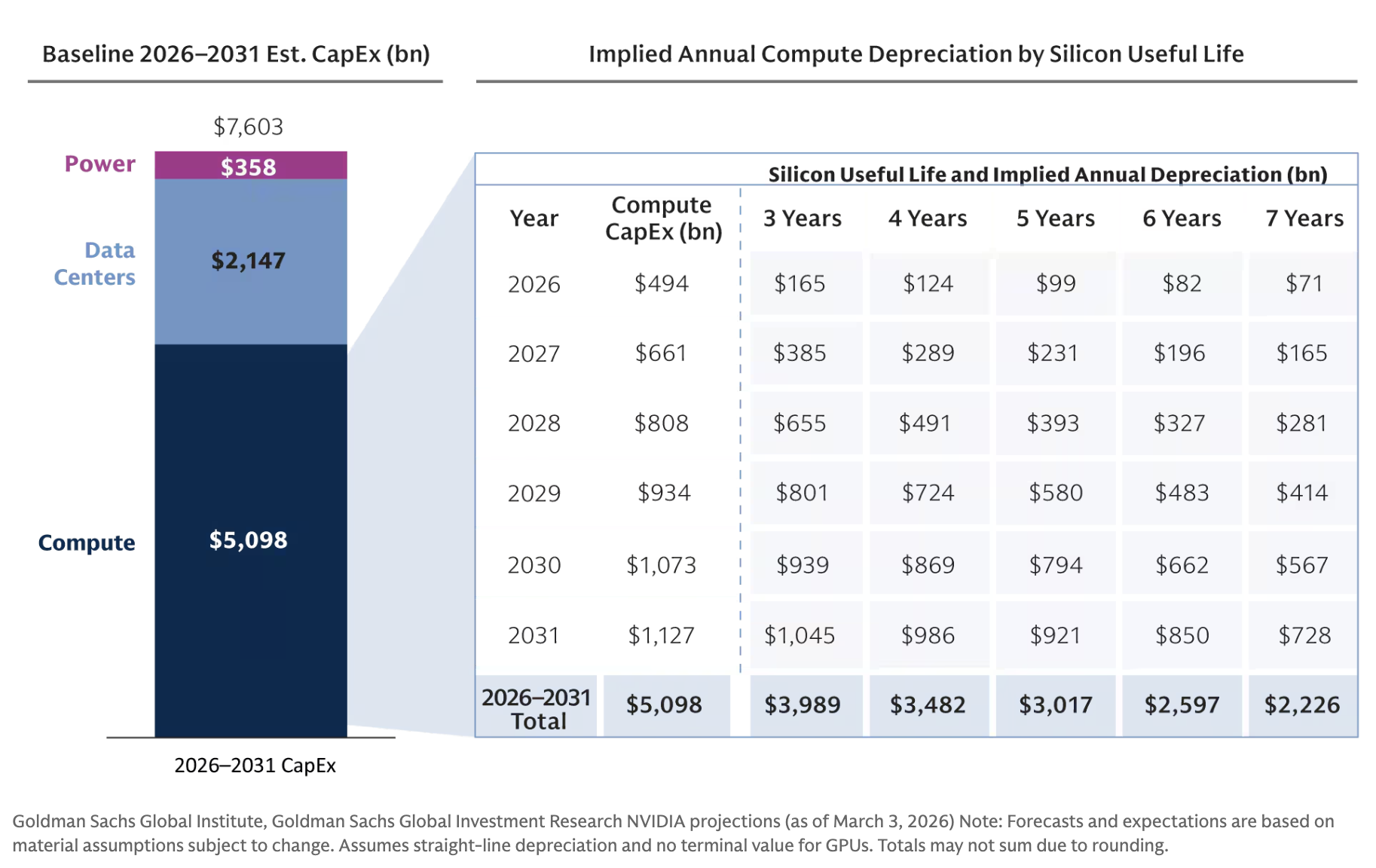 As the market heats up and deals get more competitive, more operating leases are being offered. Typical terms run 36 months, with some transactions as short as 24 months and others up to 60. But the right residual to book for these leases is still undecided.
Most asset management teams will agree a GPU server should fetch more than 5% of original cost after a three-year term. The disagreement is whether the right number is 10% or 60%.
A new report puts data behind that question. American Compute’s GPU Residual Value Report, published in June, estimates useful life can reach eight years, beyond any current financing term. It finds that residuals above 10% of equipment cost over five years can be supported. The report is based on nearly 77,000 completed resale transactions for server components.
The report shares that GPU residuals can look very strong. A previous generation GPU, such as the NVIDIA H100 released in 2022, can still resell for 60-70% of its original value as of 2026. But technology obsolescence is sudden, not gradual.
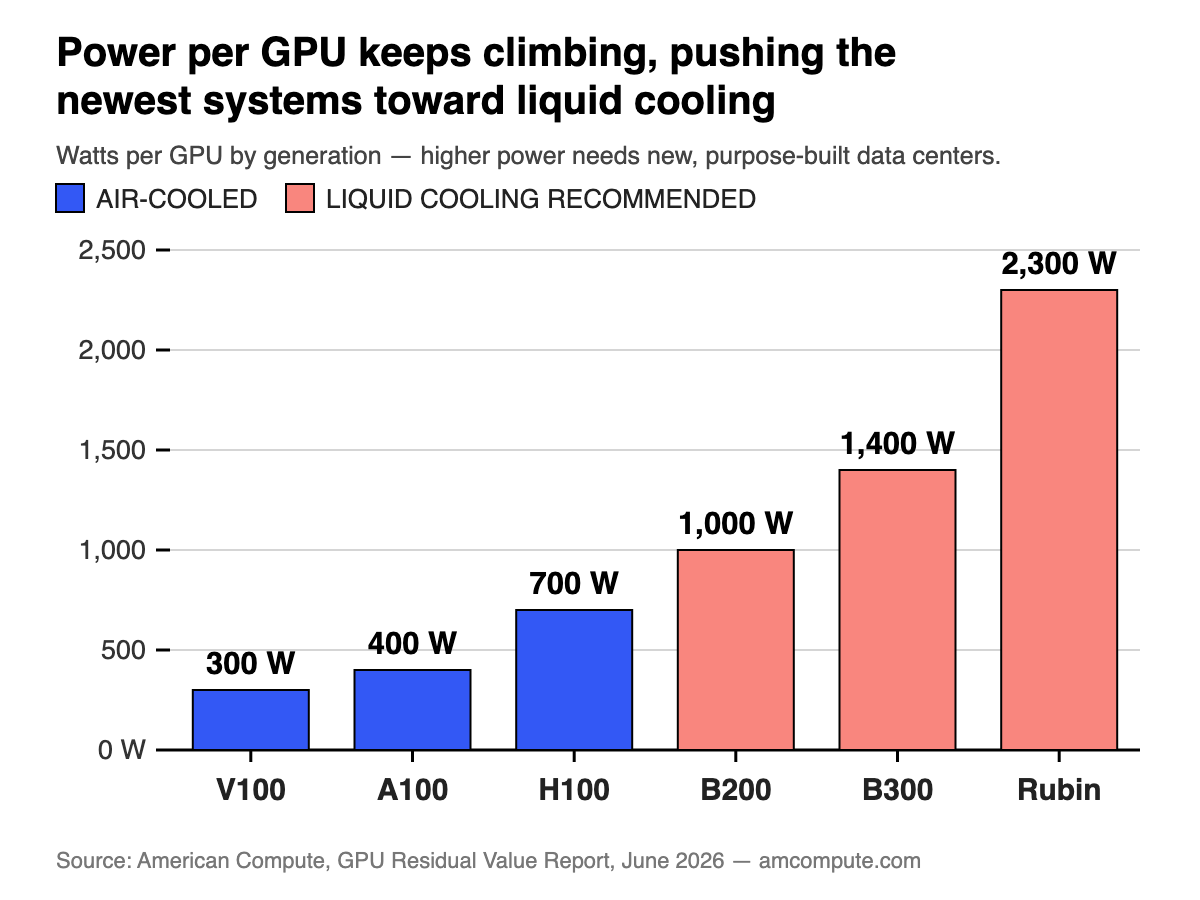
The residuals for older GPUs are being artificially propped up by a “power and cooling wall.” The report points out that the newest NVIDIA Blackwell GPUs (released 2024) cannot be installed in legacy data centers due to older facilities not having sufficient power and cooling. Instead, new greenfield data centers are being built to meet the updated power and cooling requirements. Until the new data centers are fully built out, the market is still reliant on the older, air-cooled GPUs like the NVIDIA H100s — extending their residuals.
Two more findings stand out.
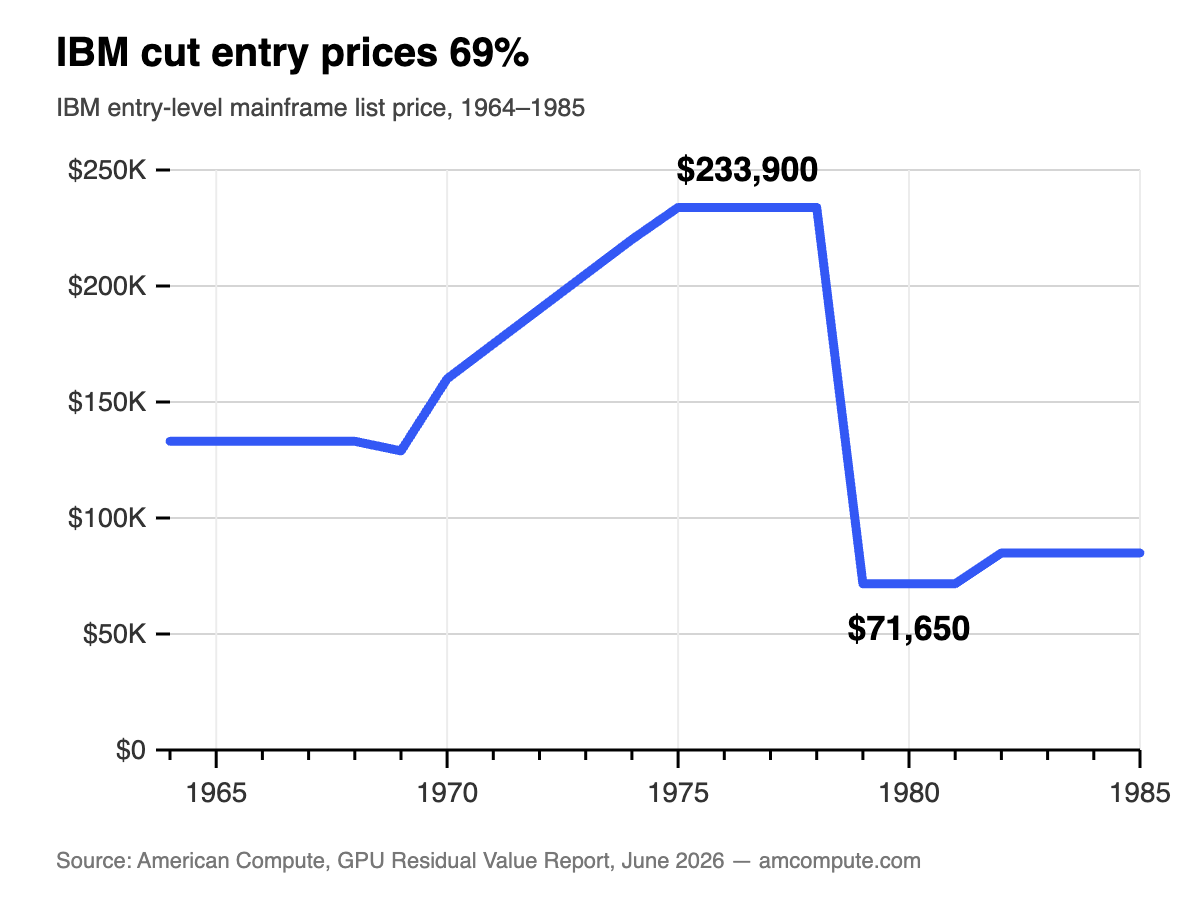
The first is a historical analogy to IBM mainframes, which longtime readers will recognize. In 1979, IBM held roughly 70% of the computer market. It introduced mainframes with four times the performance per dollar of the machines they replaced, and cut its published entry price from $233,900 to $71,650 — a nearly 70% reduction in a single announcement. The used mainframe market repriced immediately. Losses ran into the billions in today’s dollars, and lessors that had booked aggressive residuals went bankrupt within months.
The second is the modern parallel. The report ranks five adverse events that could pressure used GPU prices, and NVIDIA margin compression ranks among the highest. NVIDIA ships roughly 90% of data center GPUs and runs gross margins above 75%.
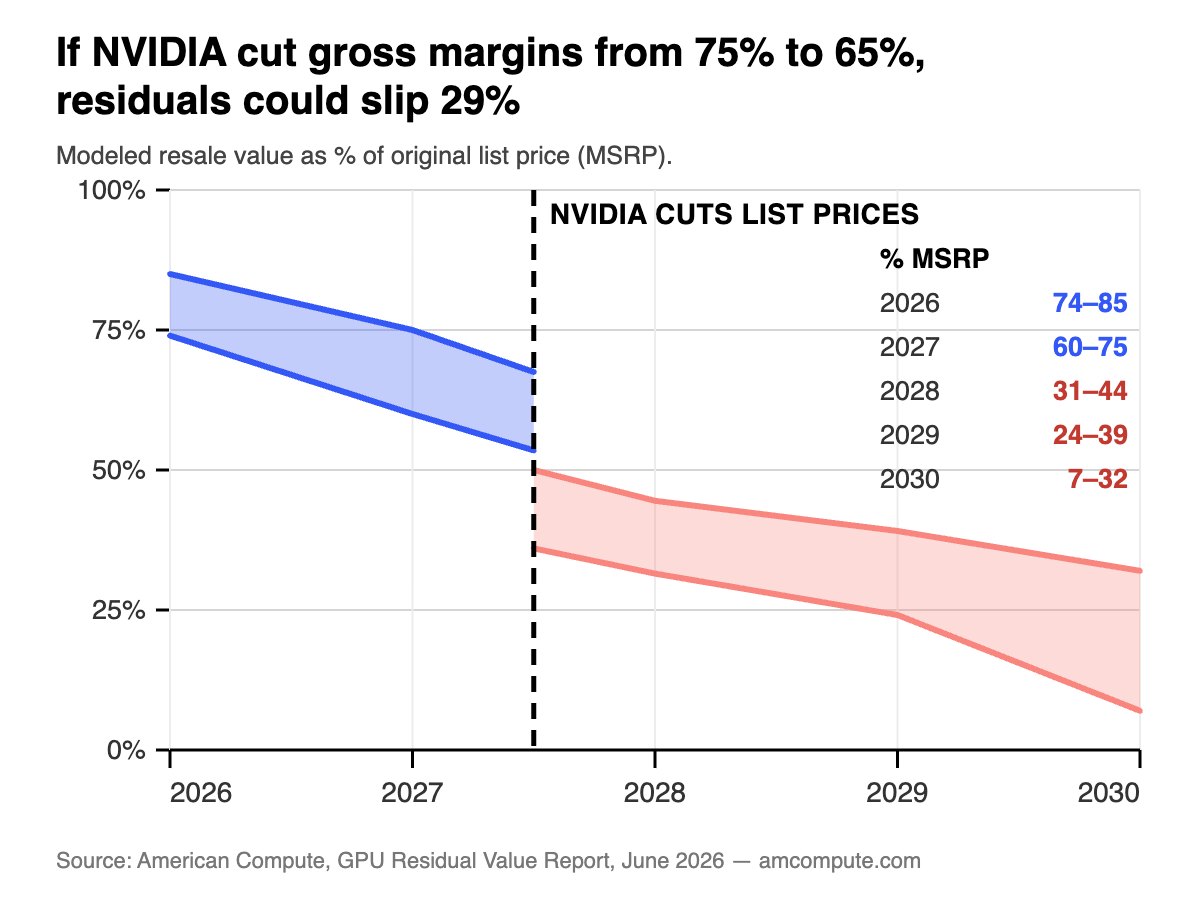
But its largest customers — AWS, Google, Microsoft, and OpenAI — are all funding R&D for alternatives to NVIDIA’s chips. If competition eventually pushes NVIDIA to cut prices to defend market share, as IBM did in 1979, GPU residuals would shift with it.
Author
Bernie Margulies is CEO of American Compute, which works with established reinsurance partners to structure bona fide residual value insurance solutions for data center IT equipment. These solutions enable equipment finance companies to book residuals with confidence — without relying on buybacks, promises or alternative guarantees.