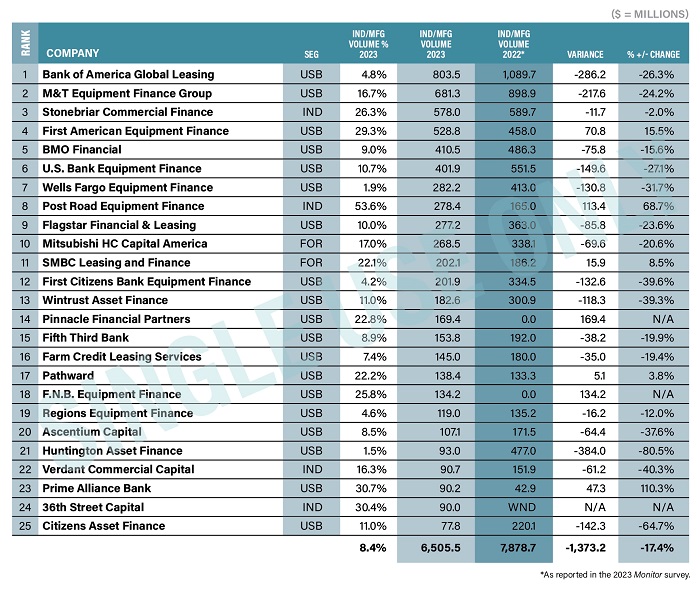
The industrial and manufacturing sector is experiencing significant shifts, but the potential for a recession adds complexity to the outlook, Nicholas Sandler, CEO of Stonebriar Commercial Finance, says.
The need for supply chain resiliency and geopolitical stability continue to drive the reshoring of U.S. manufacturing, which Sandler believes will continue to accelerate even in a recessionary environment.
“Companies recognize the value of securing more reliable production capacity closer to home as global labor and transportation costs increase, geopolitical tensions mount and the U.S. solidifies its position as an independent low-cost energy producer,” Sandler says. “Recent U.S. industrial policy has also favored domestic manufacturing, including the 2021 Bipartisan Infrastructure Law, the 2022 CHIPS and Science Act and the 2022 Inflation Reduction Act.”
He anticipates that these policies will continue to drive significant manufacturing investments for years to come, benefiting both manufacturing and peripheral industries, such as utilities and power, construction, marine and rail transportation and heavy equipment.
Among 2024’s market-shaping trends, Sandler points to environmental regulations and the government sector — in the form of protectionist trade policies, as well as significant tax incentives and capital that support domestic manufacturing — as having the most impact. “We believe we are in the early innings of an expansion in manufacturing driven by these legislative actions,” Sandler says. “These are bipartisan issues that have broad support across the aisle.”
Digitalization and automation are also top priorities, Sandler says, as manufacturers turn to technology to improve efficiency and reduce labor costs. Plus, Sandler emphasizes the need to keep an eye on a potential recession, which could lead to tighter credit markets and liquidity constraints, making it harder for manufacturers to access traditional loans. “Additionally, ongoing volatility in raw material prices and labor may compress margins for manufacturers, increasing their need for liquidity alternatives,” Sandler says. •