The U.S. construction sector is entering Q4/25 with mixed signals across activity, costs and sentiment. For equipment finance leaders, the environment reflects steady but uneven demand influenced by interest rates, labor shortages and shifting sector growth.
Total U.S. construction spending held at a $2.14 trillion seasonally adjusted annual rate in July, essentially flat from June and down 2.8% year over year, according to data from the U.S. Census Bureau. Dodge Construction Network reported a 10% monthly decline in July construction starts, with starts up 4.1% year over year. Dodge’s Momentum Index, a leading indicator of nonresidential planning, surged 7.5% in August to a new record, suggesting stronger project pipelines into 2026. Housing remains a drag. Census data shows August single-family housing starts fell 7% month over month, with permits down 2.2%, highlighting cautious sentiment in residential construction. Builder confidence, however, ticked up slightly in September as expectations for future sales improved. Nonresidential demand is supported by data centers, transportation and power projects, according to FMI’s Q3/25 North American Engineering & Construction Outlook. Although the American Institute of Architects / Deltek Architecture Billings Index reported that architecture billings remain below 50, signaling softness in some commercial segments.
Associated Builders and Contractors reported that the backlog eased from 8.8 months in July to 8.5 months in August, still above year-ago levels. Contractors continue to express concern over workforce shortages and financing costs, though optimism persists in sectors tied to public infrastructure and industrial investment.
Turner Construction’s Q2/25 index showed building costs up 1.17% quarter-over-quarter and 3.82% year-over-year. Meanwhile, industry employment slipped by 7,000 jobs in August, with firms citing persistent hiring difficulties and project delays. Labor remains the sector’s most consistent constraint.
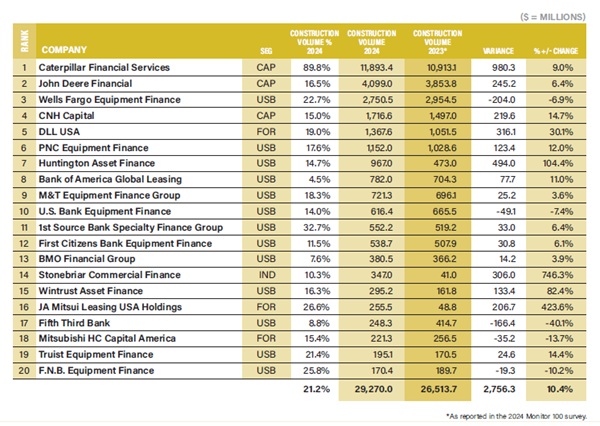
FMI’s Q3 forecast calls for construction spending growth to slow to roughly 1% in 2025, down from 7% in 2024, with strength in infrastructure offset by residential headwinds. For equipment financiers, this environment suggests steady demand tied to replacement cycles and infrastructure projects, tempered by rising costs and cautious residential activity. Monitoring backlog, labor dynamics and planning pipelines will be key to anticipating credit needs and structuring deals effectively in 2026. •
View Interactive Charts on Suite by Monitor