
First American Equipment Finance
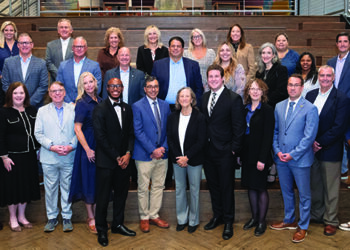
When I returned home from Monitor’s inaugural LeadHER Women’s Leadership Summit, I expected to carry back pages of notes, a few new ideas and some valuable connections.
What I didn’t expect was to leave with a renewed understanding of something much deeper: leadership isn’t about becoming someone else. It’s about having the courage to bring more of yourself to the table.
The best conferences don’t simply educate us. They give us space to think. They challenge assumptions we’ve carried for years. Sometimes, they hold up a mirror and help us see our own experiences more clearly. That was LeadHER for me.
Throughout the summit, I found myself returning to a theme that surfaced in sessions, panel discussions and conversations over coffee: the difference between growth and conformity.
For many women, particularly those building careers in historically male-dominated industries like equipment finance, success has often involved adaptation. We learn the culture, study successful leaders and refine our approach. We figure out when to speak up, when to push harder and, perhaps most often, when to soften a message.
None of this is necessarily intentional. It is simply the reality of navigating environments with long-established ideas about what leadership should look and sound like.
Over time, many of us become fluent in what I now call the “pleasing voice,” the version of ourselves designed to make others comfortable. The one that adds another apology, softens a strong opinion or edits a difficult question before asking it. (I had a sticky note on my desk for years reminding me to stop using smiley faces.)
Learning to communicate effectively is valuable. But somewhere along the way, many of us begin confusing growth with conformity The two are not the same.
Growth expands us. Conformity narrows us. Too often, professional success feels less like growth and more like editing ourselves to fit the room.
That realization stayed with me long after the summit ended. As I reflected on the leaders who have influenced my career, I realized none of them were successful because they fit perfectly into a predetermined mold. In fact, the leaders I admire most stand out precisely because they don’t.
Some are outspoken and energetic. Others are thoughtful and measured. Some lead from the front. Others lead quietly through trust, consistency and influence. What they share is authenticity. They understand their strengths. They know their values. They create space for others to contribute. Most importantly, they don’t spend their energy trying to become someone else. Because let’s be honest: we don’t have time to expend that energy.
Leadership, much like a tapestry, isn’t created from a single thread. It forms over time through experiences, relationships and opportunities that weave together:
• A mentor who challenges your thinking
• A sponsor who advocates for you when you’re not in the room
• A difficult assignment that stretches your confidence
• A setback that teaches resilience
Individually, those moments may seem small. Together, they create the texture, strength and pattern of a leadership journey. The same principle applies to organizations.
The business case for authenticity is becoming harder to ignore. Research from McKinsey & Co. continues to show a link between diverse leadership teams and stronger financial performance.1 Just as important, organizations thrive when people feel comfortable contributing ideas, challenging assumptions and bringing different perspectives to the conversation.
Innovation depends on more than expertise. It depends on trust. For an industry built on relationships, trust and problem-solving, that matters.
So, it’s time to take our masks off. It’s time to let go of the safe, softened versions of ourselves we’ve carefully constructed over the years. Stop filtering out ideas that feel too bold, too unconventional or too different. After all, those ideas often helped earn us a seat at the table in the first place.
As our industry continues to evolve, the next generation of leaders won’t need another blueprint for fitting in. They’ll need the confidence to lean in all the way.
The connections, mentors and remarkable women I met reinforced something I think many of us already know: we are at our best when we lead from a place of authenticity.
My tapestry is still being woven. Every challenge, mentor, sponsor and opportunity adds another thread. Thanks to LeadHER, I know that tapestry will be woven more boldly moving forward.
Perhaps that’s the real gift of conferences like LeadHER.
They don’t tell us who to become.
They remind us of who we’ve been all along. •
1Hunt, Dame, et. al., “Diversity matters even more: The case for holistic impact,” McKinsey & Company, Dec. 5, 2023.
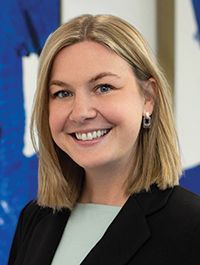
Elizabeth Cook is an assistant vice president at First American Equipment Finance, where she collaborates with physician groups, community health centers and ambulatory surgery centers to develop strategic capital financing solutions that support growth, innovation and long-term organizational success. She works closely with healthcare leaders nationwide to fund transformational initiatives, including facility expansions, technology investments, and equipment acquisitions.