

When leadership development programs end, participants walk away with new ideas, fresh perspectives and personal goals for themselves and their organizations. But when it comes to turning those ideas into real business impact, many programs fall short.
In October 2025, Wintrust Commercial Finance (WCF) enrolled three of its NextGen leaders representing three distinct functional areas in STRIPES Leadership Program. By April 2026, they walked away not only with expanded leadership capacity, but with a cross-functional commitment to improve the future of their business.
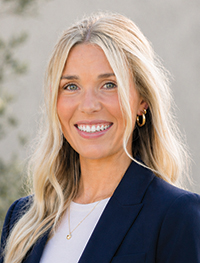
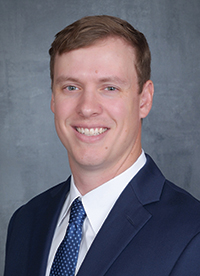
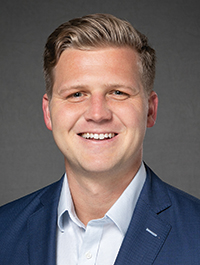
As part of the capstone project component of the curriculum, As part of the capstone project component of the curriculum, Addison Flumerfelt, capital markets associate; Jacob Mathes, assistant vice president of finance; and Mark Swearingen, assistant vice president of credit, decided to collaborate on a project focused on one of the equipment finance industry’s most pressing long-term challenges: talent. What followed became more than a capstone project — it became next-generation leadership in action.
Seeing the Gap Before It Widens
“We noticed a common theme in discussions with executive leadership around strategic planning initiatives that included an emphasis on young talent and our recruitment pipeline,” the team explains. “We felt the three of us were in a unique position to help address these long-term priorities given our distinct roles within the organization, as well as our own personal goals as contributors and leaders.”
While WCF already had an internship program in place, the team recognized that it was ripe for enhancement as a more comprehensive intern experience and a true full-time talent pipeline.
Interns primarily operated within a single department, usually credit, limiting exposure to the broader business. Onboarding and training, while valuable, lacked consistency and could benefit from a more structured, intentional approach.
Recruiting efforts were concentrated within a select group of universities, leaving room to broaden outreach and diversify the pipeline. Periods of downtime, along with some hesitation around informal networking, highlighted the need for more deliberate engagement, mentorship and relationship-building throughout the program. There was also limited visibility into potential career paths and long-term growth within the organization.
Taken together, these insights pointed to a clear path forward: evolving the internship into a more integrated, high-impact leadership development experience.
“Our first step was to work together on proposing enhancements to the structure and content of the internship program. We gleaned insight from conversations with previous internship participants and our own personal experiences as interns. After we gathered our thoughts and ideas, we presented a deck to our executive leadership to engage in open and frank conversation, receive feedback and achieve leadership buy-in. As a result, we faced no resistance during this phase and had the full support of the organization.”
From Internship Program to Leadership Pipeline
What they created became a full redesign of how early-career talent enters and grows within the business.
The program introduces rotational exposure across departments, including credit, asset management, operations and business development, giving interns a broader understanding of the organization while reducing silos and improving engagement.
The team built formal onboarding and standardized training materials, including industry education and structured learning sessions. They established stronger ownership through designated program leaders and mentors, creating clearer accountability and more consistent support.
Interns will now complete capstone projects of their own and present them to leadership — giving the company a stronger lens into initiative, communication skills, creativity and long-term fit.
The team also added bi-weekly mentor check-ins, Lunch & Learn networking sessions, social and volunteer experiences, field visits, and expanded university outreach to improve both recruitment and retention. Most importantly, the redesign comes at a critical point in the industry’s evolution that the team knew they needed to capitalize on and leverage.
“We feel that the industry is in a ‘Goldilocks period’ for this generation of leaders,” the group says. “We have access to industry veterans who have shaped and grown the industry into what it is today, while also having a growing number of opportunities to step up and lead in ways that may not be accessible to our generation in other types of businesses.”
Paul Hallauer, president and CEO of Wintrust Commercial Finance, sees the long-term impact they are delivering: “The project gave Addison, Jacob and Mark room to lead and will accelerate their readiness as they will be the training managers for WCF’s 2026 student interns. This will provide hands-on leadership experience in direct training, talent management, reporting and labor time tracking. This process will be formalized into procedures that will be used for future intern classes and continue to identify and develop WCF’s pipeline of full-time employment candidates. We also intend to potentially use the platform they created as a model for training program development.”
The internship program they developed will officially roll out from May 18 through August 7, marking the first full implementation of this new model.
Leadership Isn’t A Title
This marked the first time STRIPES participants from the same company collaborated on a capstone project within the same cohort. The collaboration required constant coordination, clear ownership and flexibility.
“We realized early on that we each have complementary skill sets that fill in gaps in each other’s weaknesses. Working together on this project gave each of us the freedom to lean into skills we were less confident in while still having the support of each other to learn and grow. We were able to build out a more in-depth program than any of us could have managed individually on top of day-to-day work.”
At the same time, they were actively moving through STRIPES curriculum together — working through Business Workshops on change, growth, efficiency and performance while participating in Transformational Group Coaching sessions that challenged them to think bigger. Instead of treating the curriculum as theory, they applied it in real time.
“We were also inspired by the work our peers were doing, which helped us to think big while envisioning our project,” the leaders say. “We had ample opportunity for candid conversation as we were challenged by our cohort to apply the lessons learned through the STRIPES curriculum.”
Not Climbing the Ladder — Building It
The biggest outcome may not have been the internship program itself. It was the shift in how these three leaders saw themselves. The team described it as empowerment.
“We each feel empowered to run with our ideas and trust our instincts,” the leaders say. “We don’t feel the need to wait around to react to change, but rather we can be proactive in the strategic direction of the organization. We feel empowered by the support of our executive leadership to come up with new ideas and ways to address challenges. We can drive change and be part of shaping the culture and do not need to be hesitant to jump in and participate in meaningful conversations.”
Hallauer noticed the same transformation: “Over the past six months, the group moved from requesting direction to setting it. They worked well collaboratively to come up with a new process in the recruitment and training of student interns, documented their intentions and communicated the project well to senior leadership. Each of them has become more confident in their abilities and contributions to WCF.”
That may be the clearest picture of next-generation leadership in equipment finance today — not waiting for permission, but stepping forward, identifying opportunities and delivering high-impact solutions. Not asking where they fit, but shaping and driving what comes next.
And for this team, the purpose goes beyond their own advancement: “We do not take lightly the investment that Wintrust has made into each of us; we each took it as a great compliment to be selected for STRIPES. Our hope is to repay the organization for the trust they have placed in us by working our hardest to continue to build on the success Wintrust has achieved. We want to cultivate a young talent pipeline for the organization and build the same level of trust and empowerment for the generation that comes after us.”
That is what NextGen leadership looks like. Not climbing the ladder alone — working together and building a more intentional and robust experience for the people coming after you. •
Wintrust Commercial Finance is a division of Wintrust Asset Finance Inc. Banking products provided by Wintrust Community Banks.
Erin Rafter is an associate editor of Monitor.