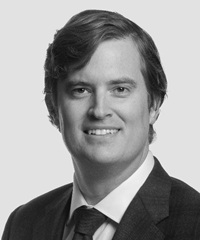
Eldridge was recently named a Market Leader in the Industrial & Manufacturing asset class, ranking among the top 20 lenders/lessors by new business volume. We sat down with the Harrison Smith to talk strategy, technology, and what’s next for the industry.
What factors do you attribute to this strong performance?
We believe our performance is driven by our team’s decades of experience financing manufacturing and industrial asset classes, our rigorous diligence process and structuring discipline, and our scale, which allows us to play in larger projects. We pride ourselves on being pioneers and specialists in asset-based finance — we built a differentiated platform that has originated over $18.5 billion of equipment leases and loans since our inception in 2015. We operate the largest private independent equipment finance company in North America by assets and origination volume, supported by an investment-grade balance sheet, risk management, and a diverse customer base.
How does Eldridge differentiate itself in the highly competitive industrial and manufacturing equipment financing space?
Over the past three years, our team has originated over $2.2 billion in new transaction volume each year. Our ability to commit to over $500 million of financing directly for our customers, while maintaining flexibility to service opportunities down to $10 million for customers we can grow with over time, is a strategic advantage and a clear differentiator. We have stable and diverse sources of financing, including repeat issuance in the high yield, unsecured, and secured financing markets, and have issued 15 asset-backed securitizations exceeding $10 billion of proceeds.
What trends are currently shaping your industrial and manufacturing financing strategy?
We think the reshoring of American production and supply chains, the upgrading of aging infrastructure, our country’s emergence as an energy superpower, and the continued development of new AI technologies are all positively impacting the equipment finance industry broadly, with an outsized impact on the manufacturing and industrial asset classes. We are closely watching the growing demand placed on grid capacity. Over the last five years, we have committed more than $2 billion of capital spanning 2.5 gigawatts within the power space — enough capacity to power Las Vegas.
How are the needs of industrial and manufacturing customers evolving, and how is Eldridge adapting to meet them?
We are seeing more customers reshore their manufacturing and industrial footprints into the US market or increase existing capacity, which requires long lead times to expand footprints and order new equipment. To support these strategic decisions, our customers require a financing partner with a stable capital base, a long-term view, flexible structuring capabilities, and certainty to close. We believe Eldridge can meet these requirements with $75 billion in assets under management, speed of execution, and a specialized, experienced team.
Can you share an example of a recent deal or financing solution that demonstrates Eldridge’s approach to serving this market?
Earlier this year we closed a $200 million equipment financing facility with Conduit Power, supporting the buildout of Conduit’s 200MW distributed generation portfolio. More recently, we closed a $75 million sale-leaseback of production equipment for a leading global producer of chemical inputs used across everyday consumer and industrial products. Our team’s structuring flexibility and underwriting expertise unlocked hidden equity that was reinvested in the company to grow its enterprise value.
How has technology — from credit decisioning to asset and equipment management tools — changed the way you work with industrial and manufacturing customers?
Technology has had a meaningful impact on the way we work at Eldridge. We are early adopters of AI, deploying tools to modernize and streamline our underwriting and diligence processes. We leverage AI to help input financial statements into our risk model faster than our analysts could do manually, freeing up resources to focus on higher-value structuring and research. Our weekly AI teach-ins help build organizational knowledge and encourage the adoption of new tools.
What role do partnerships (with equipment dealers, OEMs, or other industry players) play in Eldridge’s industrial and manufacturing business?
We have approximately 30 employees dedicated to our Equipment Finance portfolio, which manages over $7 billion of assets as of June 30, 2026. We have strategic relationships with our partner law firms, appraisers, technology providers, and referral sources that allow us to efficiently scale and generate access to opportunities that may be unavailable to the broader market, spanning manufacturing, energy and power, maritime, chemicals, metals, technology, aircraft, and railcars.
How does your risk management approach adapt to the unique cycles and challenges of the industrial and manufacturing sector?
Our risk management approach is rooted in a rigorous diligence process — we are focused on financing asset classes we have expertise in for customers that have a reason to exist across business and industry cycles. Being disciplined in asset and obligor selection has allowed us to deploy more than $18.5 billion in lease and loan transactions since 2015 with less than 3 basis points of credit losses.
Looking ahead to 2027, what opportunities and challenges do you see for industrial and manufacturing financing, and how is Eldridge preparing for them?
Looking ahead, we anticipate continued opportunity in this space and intend to be very active. We believe this is a large, addressable market in which independent, specialized platforms like Eldridge can provide customized capital solutions for new capex, strategic projects, acquisitions, refinancing, and liquidity opportunities. We believe we have one of the lowest costs of capital, and while we are prepared to compete aggressively on pricing, we will not compromise on structure to win a transaction.
How would you describe the current state of the industrial and manufacturing equipment financing market, and what key factors are driving demand right now?
We believe this is a fragmented market. Traditional sources such as banks have reduced their lending due to stringent capital and regulatory constraints, and we expect this to continue.