
Equipment finance bank leaders are navigating a market pulling in two directions. Replacement demand, bonus depreciation and a wave of AI-related infrastructure spending support the pipeline, while higher equipment costs, tariff uncertainty and a more crowded field of lenders weigh on decisions and margins.
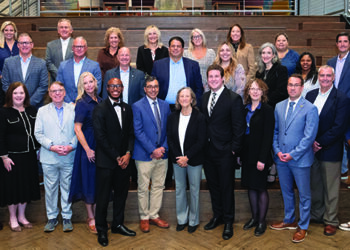
For this year’s Bank 50 roundtable, Monitor asked five equipment finance leaders about market tailwinds and headwinds, residual risk, technology and AI, and the opportunities and challenges ahead.
Their answers differ in emphasis, but a common thread runs through them: Demand for equipment remains resilient, and most panelists stress keeping experienced people and client relationships at the center as technology advances.
Looking at the equipment finance market today, what are the biggest tailwinds and headwinds you’re seeing, and how are they showing up in your pipeline and portfolio?

Chris Craft: We are seeing a strong tailwind of replacement equipment demand and in some sectors (especially those supporting AI technology infrastructure buildout), additional new growth-related equipment demand. Geopolitical and rising cost factors are the major headwind factors. While the future is always uncertain, the overall funding pipeline shows strength and momentum, and that might be even more pronounced, were it not for those headwind factors.

Craig Kern: Looking at the market today, on the headwind side, compressed margins and increased competition are keeping our attention, especially as newcomers enter the market and lenders compete for the same business. We’re also seeing economic pressures ranging from consumer demand and fuel and other input costs to tariffs and uncertainty around the economy and equipment costs.
That uncertainty can cause customers to be more deliberate, especially with larger purchases, often delaying decisions altogether. We’re also seeing some general deterioration of credit profiles, adding another layer of discernment to the financing process.
The competitive environment is showing up in the pipeline, especially as customers shop more actively for financing. Payment, cash flow, structures and credit appetite are all factors, along with vendor programs becoming increasingly competitive.
At the same time, the tailwinds are significant. Equipment remains essential for businesses to grow, remain productive and stay competitive. Despite uncertainty, equipment still needs to be replaced, and technology continues to advance. We continue to see customers who want to grow, especially in industries where equipment is mission critical. For Stearns Bank, all these factors reinforce the significance of our longevity, stability and expertise.
Our longstanding relationships and industry reputation give us a strong foundation, while our ability to understand the equipment and each business’s unique situation allows us to structure financing that fits their cash-flow needs. Remaining responsive, knowledgeable and service-oriented, while also delivering value as a lender, can help businesses move forward, regardless of the challenges they are facing.

Anthony Perettine: The strongest tailwind is the continued buildout of infrastructure, including the power and data-center investment supporting AI. Equipment is central to that work, from the assets that enable construction to the fleets that keep projects moving. We are participating selectively, particularly in transactions in our $5 million to $10 million range.
The principal headwind is the growing presence of private equity and other non-bank capital providers. Their entry has made the market more competitive and has changed the traditional bank-financing landscape. We remain focused on sound structures, appropriate risk selection and the long-term performance of the assets and borrowers we finance.

Kirk Phillips: The equipment finance industry continues to benefit from strong underlying demand for capital investment as evidenced by recent ELFA data. Businesses are focused on improving productivity, upgrading technology and investing in assets that support growth and efficiency. Those trends continue to create financing opportunities across a broad range of industries. The biggest headwind remains uncertainty. Whether it’s interest rates, inflation, geopolitical developments or general economic conditions, many businesses are taking a more measured approach to their capital spending budgets. As a result, we’re seeing longer sales cycles and more emphasis on understanding the long-term value of an investment before a customer commits.
For Wintrust Asset Finance, those conditions reinforce the importance of our relationship-based approach. Customers want a financing partner they can rely on, particularly when markets become more complex. Our experienced team, disciplined underwriting and ability to provide certainty of execution have positioned us well. While market conditions may fluctuate, our focus remains on helping customers achieve their objectives and building long-term relationships that extend well beyond a single transaction.
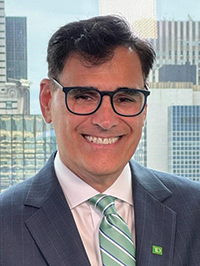
TD Equipment Finance
Anthony Sasso: Tailwinds: Permanent 100% bonus depreciation, pent-up replacement demand and continued investment in areas such as AI, data centers and domestic manufacturing are supporting equipment spending. We’re also seeing companies remain focused on preserving liquidity and maintaining flexibility, which continues to make financing an attractive option for funding growth and capital investments.
Headwinds: At the same time, elevated equipment costs, inflationary pressures, tariff uncertainty and geopolitical volatility continue to create challenges for businesses. Clients are still investing, but they are taking a more measured approach, with longer decision cycles and greater focus on the economics of a transaction before moving forward.
Used equipment values and residual risk have moved considerably in several sectors, including transportation, construction and medical. Which asset classes are you most focused on right now, and how has your approach to residual setting evolved?
Craft: The 1st Source Bank Specialty Finance Group has continuously served the vehicle fleet equipment market for 50 years, the private turbine engine powered aircraft market for 40 years and the construction equipment market for 36 years, as part of a strong bank, with roots going back to 1863. During this time, we have seen fluctuations in residual values that are caused by various factors, including seasonal, market cycle, black swan and basic supply and demand shift factors. From experience, we know it is in the best interest of both our clients and the Bank to take a steady, balanced and prudent approach to residuals, to protect all parties from downside risks. We use years of accumulated experience and focus on these equipment segments to accommodate various shifts that occur in equipment residuals.
Kern: As a lender who focuses primarily on EFAs and finance leases, we have been able to isolate ourselves from the residual risk conversation. However, as equipment prices fluctuate, that can have adverse impacts on our ability to recover on what is owed in the event of a repossession.
When a borrower buys during a peak pricing cycle and hits downturns, those units tend to carry less resale value and further complicate the loss. For example, the equipment shortages that became prevalent during the pandemic drove prices significantly higher. As supply normalized over the next two or three years, values corrected, creating a gap between what they owned and what the equipment was worth.
I don’t expect to see such a dramatic swing again anytime soon, but we may see aspects of that dynamic crop up, to a lesser extent, as inventory levels rise in the market. We continue to pay close attention to equipment values, utilization and finding the balance between risk and return. Our approach is to remain disciplined and understand the use of the asset rather than relying solely on historical values. Our core business units and focus industries help us maintain a healthy and diversified portfolio.
Perettine: We take a client-led, generalist approach rather than concentrating exclusively in a single asset class. Our clients bring deep expertise in the equipment they operate and the markets they serve, and we pair that perspective with our own underwriting discipline. When we structure a lease with residual exposure, we look closely at the asset’s expected end-of-term value, its liquidity and the client’s demonstrated understanding of the equipment. That collaborative, asset-specific approach is especially important in a market where values can vary meaningfully by sector.
Phillips: Rather than focusing solely on individual asset classes, we focus on understanding the industries we serve and maintaining a disciplined approach to asset risk. Market conditions can change quickly, and residual performance often reflects broader economic trends, technological advancements and supply-demand dynamics. Our approach has always been grounded in experienced judgment, supported by market data and ongoing portfolio monitoring. We believe consistency and discipline are critical when assessing residual risk.
The advantage of having a seasoned team is that many of our professionals have managed through multiple economic and equipment cycles. That perspective helps us remain balanced. We are neither overly aggressive during periods of strong values nor overly reactive during periods of volatility. Our goal is to make sound decisions that support sustainable growth while protecting the long-term performance of the portfolio.
Sasso: We’re paying particularly close attention to transportation, construction, technology and medical equipment because each sector is being impacted by different market dynamics. Transportation values remain sensitive to freight demand and supply conditions, while technology and certain medical assets face faster innovation cycles and the potential for accelerated obsolescence.
As a result, our residual approach has become increasingly data-driven and asset-specific. We rely on current market intelligence, valuation trends and stress testing to ensure we’re appropriately balancing opportunity and risk while maintaining a disciplined approach to portfolio management.
Vendor and dealer finance programs increasingly depend on fast, digital point-of-sale experiences. How is your bank using technology, including automated credit decisioning and AI, to improve speed and the customer experience while maintaining credit discipline?
Craft: Technology in various forms, over the years, has contributed to faster and better service for equipment finance clients. In today’s equipment finance market, AI is becoming integrated into various aspects of the sales cycle. This will continue and accelerate equipment finance industry trends of ever faster and better service.
Kern: We continue to build out efficiency and automation, especially as it relates to pulling reports, file segmentation and storage, data entry and a few other key time-saving areas. However, we are taking a very cautious approach to implementing AI. With many promises of front-end gain, in terms of speed, security around customer data remains questionable.
While we want to deliver responses to our partners as quickly as possible, we also have a responsibility to the end-user customer to ensure their data is safe and secure. We are simply not willing to jeopardize data security for the sake of a few minutes of gain on the front end. We find that many banks are taking a similar cautious approach for the same reasons.
Further, we see that maintaining the human element in our underwriting review is core to making sound credit decisions and keeps us from overlooking key context that only human intuition can identify. Technology should remove friction without removing judgment, so we’re seeking ways to use it to generate faster decisions, better visibility for our sources and a simple experience for our customers.
At the same time, advances in technology work best when they support our goal for strong credit discipline. Ultimately, we have an experienced team that builds decisions around their understanding of the customer, the equipment and the relationship. While we are focused on making the process simple and efficient, we strive to keep an element of personal interaction with our customers. As technology continues to improve, we will look for ways to use it to speed things up without taking away from good credit decisions and customer relationships.
Perettine: Technology is an important part of how we scale responsibly. Today, our most significant use of AI is in portfolio management: helping us organize information, monitor trends and support more informed risk oversight. We see technology as a way to improve efficiency and consistency while keeping experienced credit judgment at the center of decision-making. That balance enables us to respond efficiently without compromising the discipline that protects our clients and our portfolio.
Phillips: Technology has become an important enabler of a better customer experience. Customers and vendor partners expect responsiveness, efficiency and transparency throughout the financing process, and we continue to invest in tools that help us deliver on those expectations.
Automation and advanced analytics allow us to streamline workflows, accelerate decision-making and improve consistency. At the same time, we believe equipment finance remains fundamentally a relationship business. While technology can enhance speed and efficiency, experienced professionals remain central to how we evaluate opportunities, serve customers and manage risk. Our philosophy is to use technology to remove friction, not replace relationships. By combining digital capabilities with the expertise of our team, we can provide a high-quality customer experience while maintaining credit discipline and risk management standards that are essential to our long-term success.
Sasso: TD’s Equipment Finance business is primarily focused on larger, relationship-driven transactions, where client experience and expertise matter just as much as speed.
We’re investing in digital tools, enhanced data capabilities and AI-enabled solutions that help streamline workflows, improve efficiency and accelerate decision-making. The goal is to make it easier to do business with TD while maintaining the disciplined underwriting and risk management standards that our clients and stakeholders expect.
Looking ahead 12 to 24 months, what is the biggest opportunity and the biggest challenge for your equipment finance business, and how is your team preparing for each?
Craft: It is an exciting opportunity to lean into all the time-saving potential that AI technology offers, to further allow our team members to invest time in the higher-value human elements of service to others! We have added AI experts to our team and participate actively in industry events like the AI-focused Monitor Converge. A big challenge for the entire equipment finance industry remains growing the next generation of equipment financiers. We know that we win with our people, so we have invested greatly in college and early-career equipment finance recruiting and training efforts, along with the Monitor Stripes Leadership Program. We are very excited about the development of our next generation of equipment finance leaders!
Kern: Our biggest opportunity is to continue growing through deeper, sustainable relationships, not only with our existing customers and partners, but also with new relationships. At the same time, continuing to improve our internal efficiency and processes. Our biggest challenge is balancing growth with disciplined production, top-tier credit quality and profitability.
We want to grow, but we want to do it the right way that aligns with our strategic plan.
Our team is preparing for that challenge by looking and planning years ahead in budgeting and strategy, which helps align today’s decisions with the business we want to build. Our focus on stronger processes, team development, profitability and sustainable partnerships keeps us on track to grow thoughtfully.
While economic conditions will always change, our approach remains rooted in the same values: sustainable growth, constant improvement, strong relationships, disciplined decision-making and doing what’s right for the business and the customers we serve.
Perettine: Our greatest opportunity is to expand the reach of our equipment finance business as part of Peapack Private’s broader transformation and growing national presence. We are building on our existing expertise, extending into additional verticals where we have proven talent and scale, and investing in technology that supports disciplined growth.
Our greatest challenge is sustaining the current health of the asset base as costs, rates and balance-sheet pressure evolve. While many asset classes remain healthy today, conditions can change. We are preparing by staying close to our clients and their industries, maintaining rigorous portfolio oversight, and continuing to invest in the people and technology that allow us to scale thoughtfully.
Phillips: We operate in a $1.3 trillion industry, and we see our biggest opportunity is to continue to deepen relationships with customers who are looking for a dependable financing partner. In a market where many providers are focused primarily on transactions, we believe there is significant value in delivering expertise, consistency and a long-term commitment to our clients’ success. The biggest challenge is navigating an environment that remains difficult to predict. Economic conditions will evolve, and customer needs will continue to change. Success will depend on remaining disciplined while also staying flexible enough to respond to opportunities as they emerge.
To prepare, we continue to invest in our people, our technology and our client experience. We are fortunate to have a highly experienced team with deep industry knowledge, a strong commitment to service and a very supportive parent in Wintrust Financial Corp. We believe that combination of expertise, disciplined underwriting and certainty of execution will continue to differentiate Wintrust Asset Finance regardless of the economic cycle.
Sasso: The biggest opportunity is helping clients finance investments that drive long-term growth and competitiveness. Whether it’s automation, digital infrastructure, advanced manufacturing or other productivity-enhancing technologies, businesses will continue to look for ways to operate more efficiently and position themselves for the future.
The biggest challenge is navigating ongoing economic and policy uncertainty while continuing to grow responsibly. Our approach is straightforward: stay close to our clients, focus on sectors where we have deep expertise, maintain disciplined underwriting and continue investing in our people, technology and capabilities. That combination allows us to support clients through changing market conditions while positioning the business for sustainable long-term growth.
Taken together, the responses sketch a market where caution has not stopped investment. AI buildout, replacement cycles and tax incentives keep lenders engaged, while cost pressure and new competitors argue for discipline.
As these executives describe it, technology is meant to remove friction, not judgment, and the strongest differentiator remains the people and relationships behind each transaction. •